
CarGurus faces NYC lawsuit over used-car deal ratings and hidden fees
New York City alleges CarGurus misled shoppers with deal ratings and undisclosed fees as the marketplace expands its AI-powered dealer marketing tools.
On the Dash:
- New York City alleges CarGurus violated consumer protection law more than 2,000 times by labeling listings “Good Deal” or “Great Deal” despite mandatory fees and other pricing conditions.
- CarGurus says it rejects the allegations and will defend itself, pointing to dealer fee-disclosure requirements, pricing badges and expanded enforcement tools.
- The lawsuit highlights growing scrutiny of online vehicle pricing transparency, making accurate fee disclosures and advertised prices increasingly important for dealers using third-party marketplaces.
The New York City Department of Consumer and Worker Protection (DCWP) sued CarGurus in New York State Supreme Court, alleging the company misled consumers by advertising vehicles as “Good Deals” or “Great Deals” while hiding mandatory fees, down payment requirements and trade-in conditions.
DCWP announced the case Oct. 15 and said CarGurus violated the New York City Consumer Protection Law more than 2,000 times during the agency’s investigation. The complaint seeks to stop the alleged practices and impose civil penalties permanently.
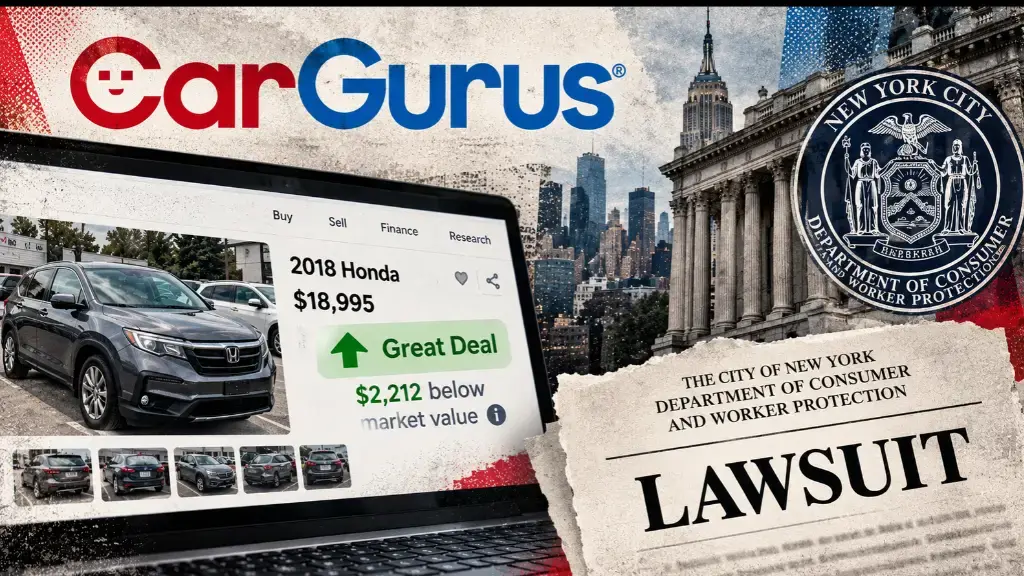
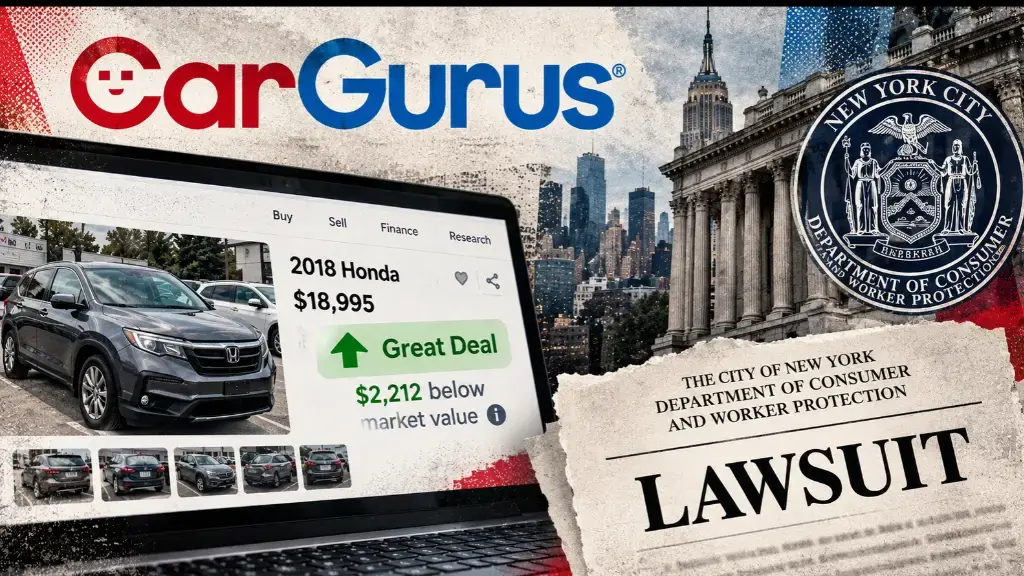
To illustrate the problem, DCWP cites a June online listing for a 2018 Honda CR-V that Elite Mitsubishi offered. CarGurus labeled the vehicle a “Great Deal” and listed it $2,212 below market value. According to the agency, however, mandatory fees disclosed lower on the listing put the actual price $1,473 above market value. According to a CarEdge report the complaint cites, mandatory fees raised listed prices by about $1,100 on average across more than 40,000 online quotes.
CarGurus disputes the allegations
DCWP also criticized CarGurus’ AI chatbot, alleging it reinforced misleading deal assessments by generating lists of supposed “deals” without the dealers’ disclaimers.
However, CarGurus disputes the claims, with CEO Jason Trevisan saying the company is deeply disappointed and surprised by the lawsuit. He cited its record of price transparency and its collaboration with regulators, and noted CarGurus’ Deal Ratings compare listing prices with similar vehicles in the region across a full spectrum of ratings, including overpriced. Additionally, Trevisan pointed to price-change histories, days-on-market data, verified dealer reviews, and vehicle history reports as tools for consumer transparency. He added that CarGurus rejects the allegations and will vigorously defend itself.
According to the complaint, CarGurus began adding “Price includes fees” and “No additional dealer fees” badges and filters to listings around April 30, and it labels listings without fee information “Fees not disclosed.” Then, in response to Federal Trade Commission (FTC) advertising and pricing demands, CarGurus announced a dealer policy change on June 24 that took effect July 14. Used vehicle listings without disclosed fees now receive a “No Rating” price analysis and rank lower in search results. CarGurus reported July 29 that more than 90% of used inventory from subscribing dealers included disclosed fees.
Nevertheless, DCWP argues those steps fall short. The agency alleges CarGurus failed to enforce its own guidelines, which confused consumers, and that listings kept “Great Deal” labels and fee badges even after July 14 despite hidden fees.
Lawsuit comes amid broader scrutiny
According to the agency, DCWP has investigated more than 106 used-car dealerships over the past five years and secured $1.79 million in consumer restitution. DCWP Commissioner Samuel Levine said the lawsuit aims to stop alleged bait-and-switch pricing and hidden fees. The case adds to regulatory pressure on online vehicle marketplaces and dealerships to ensure advertised prices accurately reflect mandatory charges.
The announcement came about two weeks after CarGurus introduced VINMax. This automated marketing tool uses real-time marketplace supply-and-demand data to identify vehicles that could benefit from more exposure. CarGurus says VINMax-boosted listings sold nine days faster than comparable listings that weren’t boosted, improving time to sale by 23% and generating 34% more daily leads. The company says the tools help dealers manage aging inventory, generate leads and protect profit margins.