
NexaMotion Group on ‘Turning Information Into Better Decisions’
NexaMotion Group explains that Transend began as a way for customers to identify parts and place orders online. The platform is now being developed around a much broader understanding of how technicians search.
“It is truly becoming a platform that understands what a technician needs rather than what they type,” said Naresh Kopparapu, NexaMotion Group’s chief information officer.
Technicians can approach the same repair in different ways. One may know an exact part number. Another may use an OE interchange number, shop terminology or a familiar description of the component. NexaMotion has replaced older search technology with an engine designed specifically around automotive parts specs and applications. The work is progressing toward semantic search, which is a fancy data/AI-minded way of defining business definitions and operations so that data can be interpreted with meaning and context in mind.
Kopparapu described a future workflow in which a technician could enter vehicle information and a symptom, allowing the platform to begin narrowing potential repair components. A conversational interface could ask follow-up questions and help assemble a parts list.
Accuracy starts with the information underneath the search. Kopparapu said ACES and PIES provide much of the industry foundation, while NexaMotion’s transmission catalog contains additional fitment information developed through its own experience. The company is modernizing that catalog into a cloud-based platform feeding Transend, its ERP systems and channel partners.
Tim Cox, executive vice president of supply chain, said some of the most useful signals for his team come from searches that fail to produce an order. NexaMotion can examine whether the part is absent from the company’s assortment, unavailable close enough to the customer, positioned at a different price point or offered under a brand the customer did not select.
Those searches create another view of what is happening in the repair market — and uncover additional sales opportunities for the company.
Sales history records what customers have purchased. Vehicle-in-operation data establishes which applications exist within a market. Search activity shows what technicians are actively trying to source as vehicles enter their shops. Cox said the company can use those signals to evaluate new SKUs, adjust branch inventories and move products through the network as applications mature.
“The search measures intent, but it doesn’t always measure commitment,” Cox said.
Category managers add context through product knowledge, market experience and feedback from the sales organization. The combination helps determine when a search pattern represents a stocking opportunity.
Scott Weinstein, president of NexaMotion Group, described a similar feedback loop through NexaMotion’s CRM. Customer conversations can be captured across markets.
“An important thing I learned long ago is: inspect what you expect,” Weinstein said. “All companies come up with slogans and missions, visions, value propositions. But you have to execute on what you’re promising to the customer.”
New tools give NexaMotion greater visibility into that execution, from online activity to customer calls and interactions in the field. Weinstein said that information still has to be tested against what leaders and customers are actually seeing.
“We still have the human element of having good leaders that work in our organization to take the data. Does it make sense? Let’s validate it first,” he said. “If we start to see trend over a certain market, we can act quicker on it.”
Transmission Puts the Model to the Test
Transmission repair has always required specialization. The units beginning to reach independent shops add greater electronic, mechanical and application complexity. NexaMotion Group CEO Neil Sethi pointed to tighter drivetrain tolerances, electronic controls, higher speed counts and the different demands vehicles place on the transmission.
Light trucks used for towing, for example, create one set of operating conditions. Other applications create their own. Fuel-economy requirements introduce additional engineering considerations that affect components throughout the drivetrain. The resulting repair challenges vary by platform, engine and vehicle use.
Kevin Rozsa, executive vice president of NMG mergers and acquisitions and Transtar sales, is seeing later-model units enter the independent repair cycle more frequently. Some rebuilders have had limited exposure to nine- and 10-speed transmissions. Recent visits with customers showed 10-speed units beginning to arrive more regularly in shops.
Those units also arrive at a time when the transmission aftermarket is working through a technician challenge. Experienced rebuilders have left the industry, and newer units require additional technical knowledge. Transtar works with ATSG and ATRA on seminars throughout the United States and Canada to provide rebuilders with information on these applications.
The changing transmission mix also shapes NexaMotion’s proprietary product strategy.
Transtar-branded products include new components. Transmaxx covers remanufactured transmissions, hard parts and transmission electro-hydraulic control modules (TEHCMs). RECON Certified supplies remanufactured torque converters. Together, the brands give NexaMotion additional control over the solutions it can offer as new repair needs develop.
Rozsa said some suppliers have reduced their involvement in transmission component manufacturing. Increasingly complex eight-, nine- and 10-speed units create opportunities for NexaMotion to develop products around gaps it sees emerging in the aftermarket.
“We want to be able to come to the aftermarket with solutions before anyone else or solutions that no one else has come up with yet,” Rozsa said.
The product team works closely with Cox and the supply-chain organization to evaluate data and identify opportunities worth pursuing. Cox said older applications have remained significant longer than expected, in some cases, while some newer applications are failing earlier. His team is using AI tools to identify local, regional and seasonal patterns, and follow individual parts through their lifecycles.
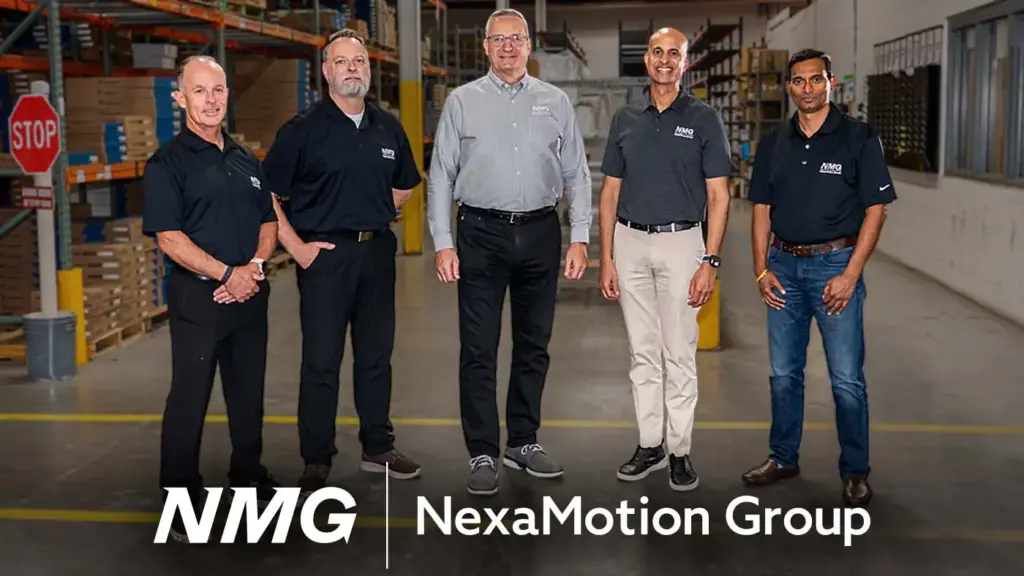
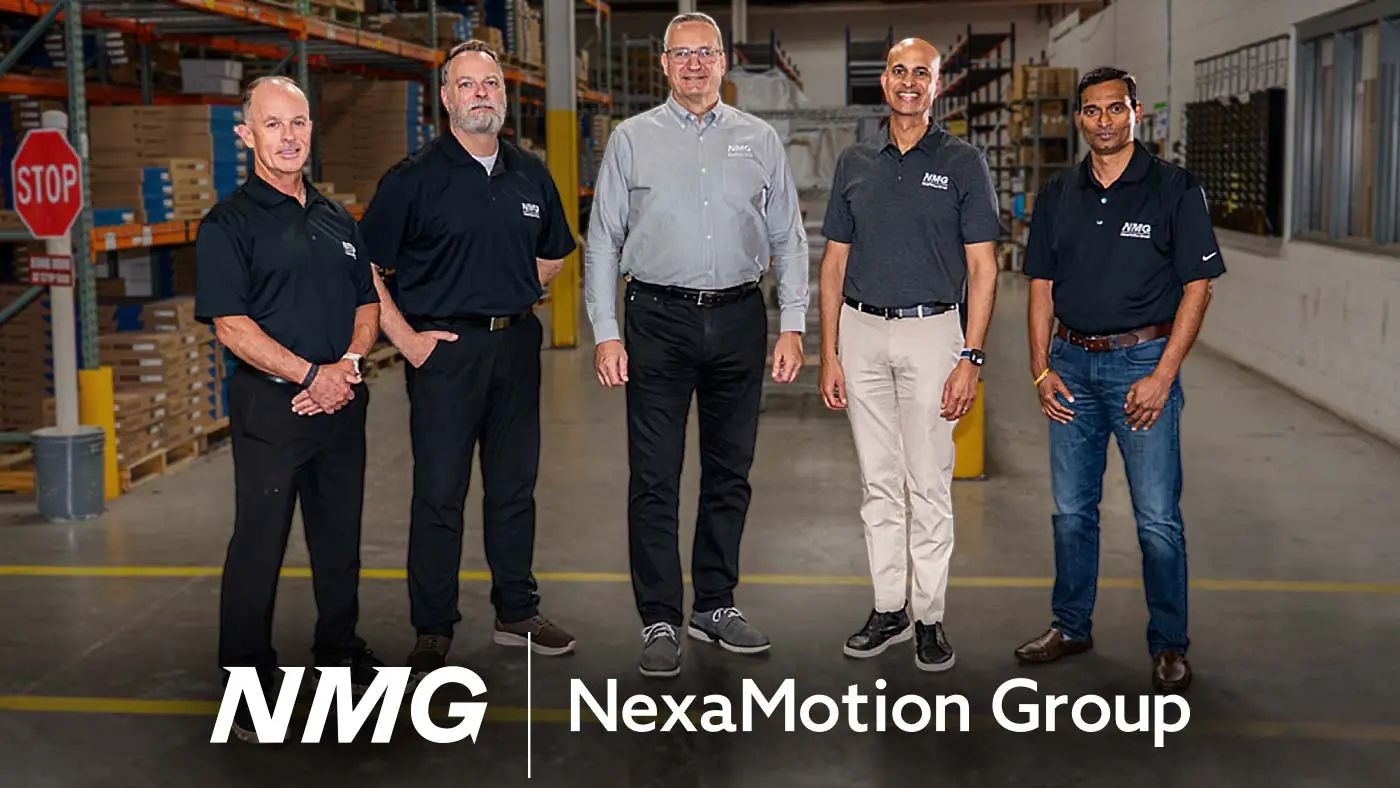
Pictured: The NMG team (left to right): Scott Weinstein, Tim Cox, Kevin Rozsa, Neil Sethi, Naresh Kopparapu.
PLEASE NOTE: Look for Part 3 of this Cover story, Creating More Room for Greater Expertise, in an upcoming edition of AftermarketNews.