
What is Caster, and How Does it Influence Tire Wear?
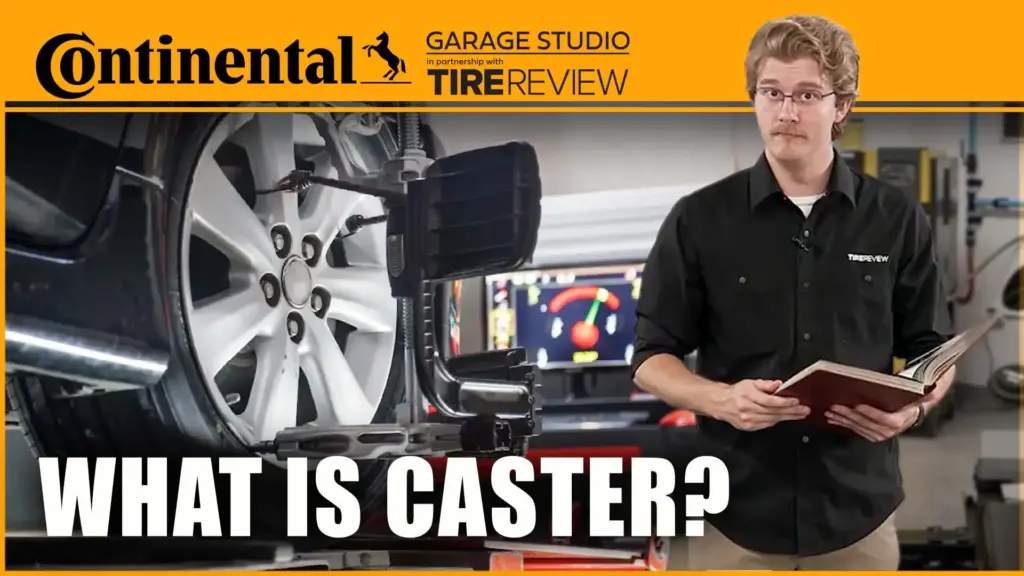
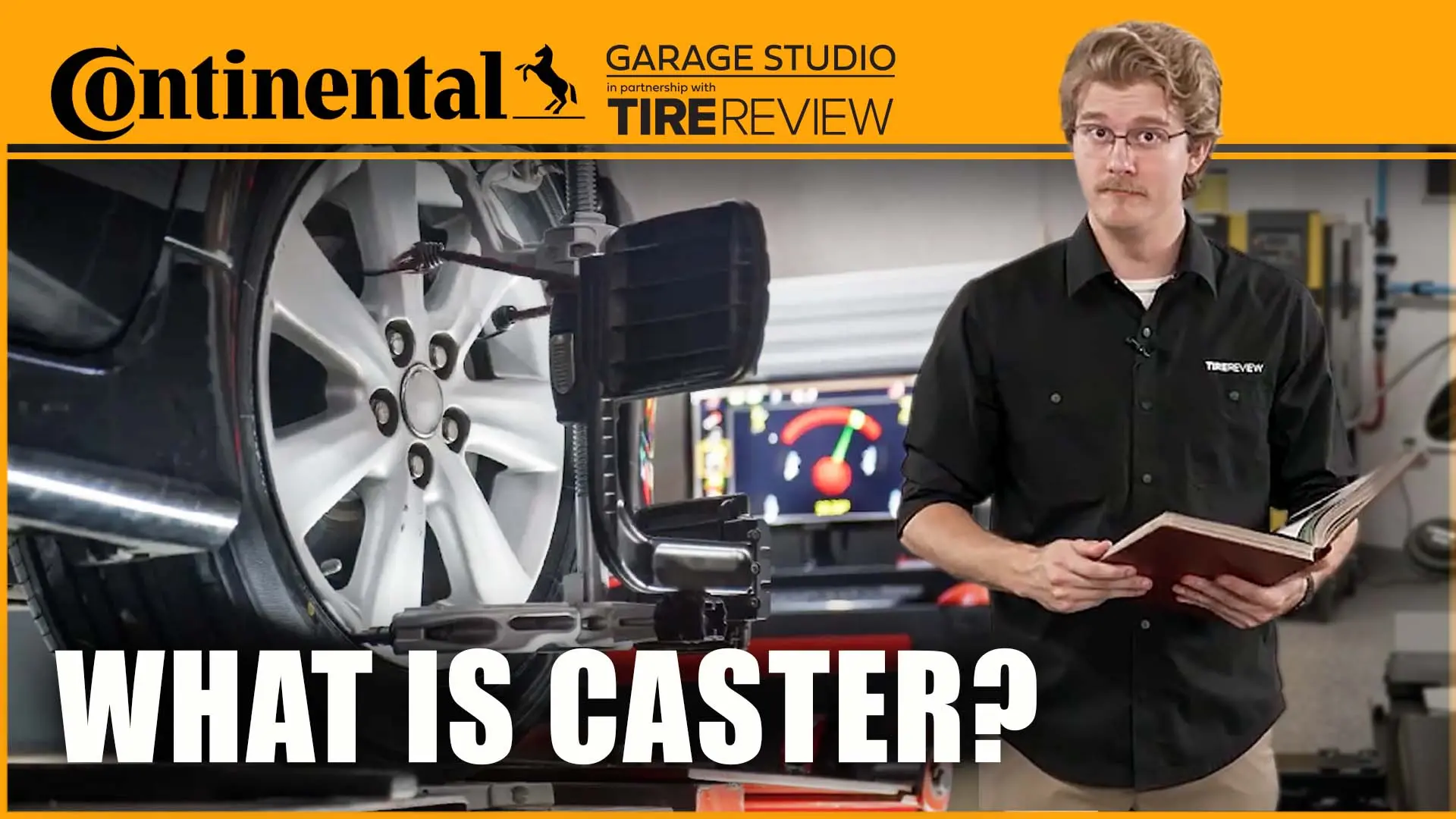
Caster tire wear is usually indirect, but the alignment angle can influence how tread wears during turns. It is one of the fundamental wheel alignment angles, and while it does not directly cause tire wear, it can affect shoulder loading during cornering.
Caster is the angle of the steering axis when viewed from the side of the vehicle. That axis acts as the hinge line around which the wheel pivots when the driver turns the steering wheel.
Most vehicles use positive caster. This means the top of the steering axis tilts slightly toward the rear of the vehicle. Positive caster helps the steering return to center after a turn. It also improves straight-line stability, especially at highway speeds.
Caster Tire Wear Develops Through Camber Change
Caster changes how the wheels lean during a turn. With positive caster, the inner wheel tilts outward while the outer wheel tilts inward.
This movement shifts load across the tire contact patches and helps the vehicle corner.
Caster does not normally wear a tire by itself. Instead, it changes camber as the wheels turn, a movement often called camber roll. As the tires lean during cornering, more load can be placed on the tread shoulders. Under normal driving, the effect may be minor. Aggressive cornering, however, can accelerate shoulder wear.
Too much caster can also make steering feel heavy or harsh. For that reason, caster specifications vary by vehicle.
For tire dealers and alignment technicians, caster may not be the direct cause of an unusual wear pattern. However, it can contribute to shoulder wear by changing wheel angle during turns.
Don’t forget to follow us on Instagram and Facebook and subscribe to our YouTube channel for more tire, service and shop operations videos.