
Automotive Suspension Market Projected to Reach $43.2 Billion by 2033
The automotive suspension market will grow from $39.6 billion in 2026 to $43.2 billion by 2033, according to MarketsandMarkets. The report projects a compound annual growth rate (CAGR) of 1.2%. The automotive suspension market continues to expand as manufacturers transition from passive mechanical components to electronically controlled, software-coordinated systems.
Increasing adoption of adaptive and semi-active dampers and air suspension allows automakers to optimize ride comfort, handling and body control independently. These technologies reduce reliance on fixed spring-damper characteristics.
Software-defined vehicles and automated driving also increase the need to coordinate suspension with steering, braking and vehicle-motion-control systems. Suppliers such as ZF already integrate active and semi-active damping with centralized chassis software.
Larger battery packs increase vehicle mass and alter weight distribution. Growing SUV and large-vehicle adoption also increases requirements for load management, ride-height control and roll and pitch suppression. These factors support higher-value suspension architectures.
Sensor- and camera-informed predictive suspension offers another growth opportunity. These systems use road-surface information to adjust damping before vehicles encounter disturbances. For example, ZF’s AI Road Sense feeds road-condition data into chassis software to control damping in real time.
However, active and semi-active suspension systems increase complexity, sensor and actuator requirements, functional safety demands and calibration efforts. Automakers must justify higher costs through measurable improvements in ride quality, handling and safety. Scalable architectures and software reuse remain critical for mass-market adoption.
MacPherson Suspensions Expected to Maintain Largest Market Share
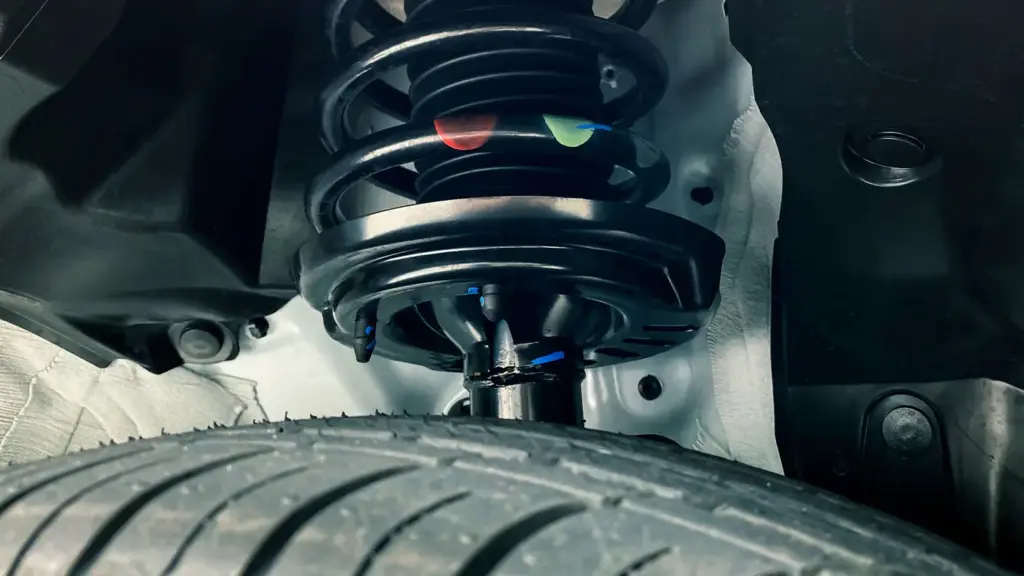
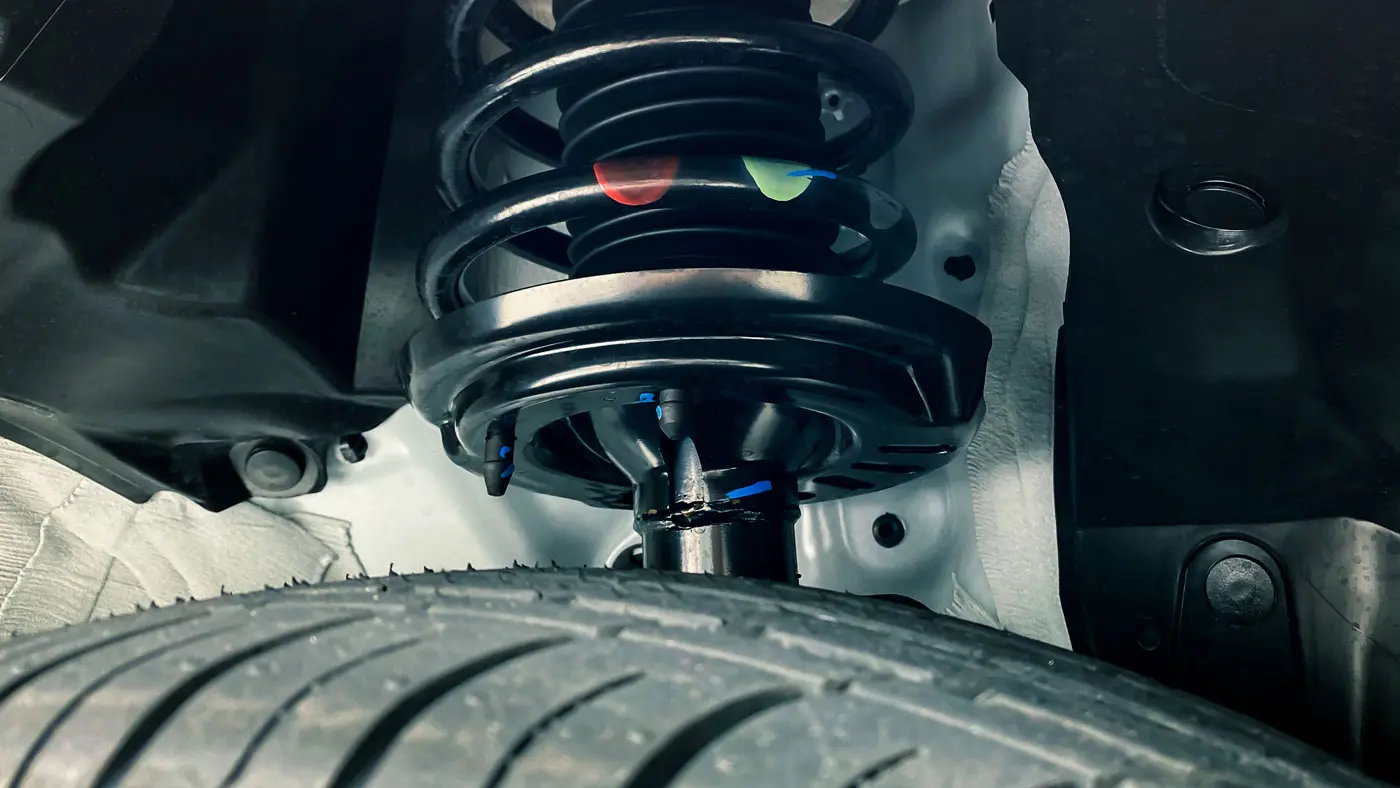
MacPherson struts remain the most widely adopted front-suspension architecture globally. Asia-Pacific represents the largest market by volume because of high production of compact and midsize passenger cars and light commercial vehicles (LCVs).
Low costs, compact packaging, simplified components and reduced weight make MacPherson struts suitable for high-volume vehicle platforms. Eliminating a separate upper control arm also reduces weight while maintaining adequate ride and handling performance.
Estimates indicate MacPherson struts accounted for more than 70% of compact and midsize vehicle front-suspension applications in 2025. This estimate covers China, India and Southeast Asia.
Compatibility with modular vehicle platforms allows automakers to standardize suspension layouts across multiple models. This reduces engineering, tooling and assembly complexity while supporting internal combustion engine (ICE) and electric vehicle (EV) packaging requirements.
MacPherson suspensions dominate mainstream vehicles across Asia-Pacific, Europe and North America. However, premium SUVs, performance vehicles and higher-end EVs increasingly use double-wishbone or multilink front suspensions. These advanced architectures provide greater wheel control, handling precision and ride refinement.
MacPherson suspensions retain volume leadership in cost-sensitive applications, while advanced architectures serve higher-value vehicles. Suppliers increasingly focus on higher-content MacPherson systems rather than replacing the architecture. These systems incorporate lightweight struts, integrated knuckles, advanced dampers and electronically controlled modules.
Active Suspension Projected to Experience Fastest Growth
Active suspension represents the fastest-growing suspension segment during the forecast period. Growing demand for ride comfort, handling precision, safety and real-time vehicle dynamics drives adoption, particularly among premium passenger vehicles and SUVs.
In 2025, Asia-Pacific accounted for more than 60% of new-vehicle SUV sales. Higher curb weights and elevated ride heights increase demand for adaptive and active suspension systems. High-end EVs and luxury SUVs increasingly incorporate electronically controlled suspension technologies. Examples include the Mercedes-Benz EQS SUV, Porsche Taycan Cross Turismo and BMW iX.
These systems manage battery-related mass, variable loading, pitch, roll and ride comfort. Active suspensions continuously generate counterforces at each wheel, providing greater body-motion control than passive or semi-active systems.
Integrated chassis control also supports adoption. Active suspension coordinates with steering, braking and torque-vectoring systems to manage pitch, roll, heave and wheel loads independently. These capabilities improve vehicle control during acceleration, braking and cornering.
High-performance EVs and premium SUVs require systems that compensate for greater vehicle mass and rapidly changing axle loads. Manufacturers must maintain ride comfort and handling despite these demands.
Predictive Suspension Technologies Gain Importance
Camera-based advanced driver assistance systems (ADAS) and road-preview technologies support predictive suspension development. These technologies detect road disturbances before wheels encounter them and proactively adjust actuator force. This shifts suspension technology from reactive damping toward software-controlled vehicle-motion management.
Integrating sensors, ADAS and software-defined vehicle platforms also enables predictive damping and load-sensitive suspension control. These developments increase the importance of software and electronic components within suspension systems.
Suppliers can differentiate their products through adaptive control, software calibration and integrated vehicle-dynamics functions. These capabilities also help premium automakers distinguish their EV and SUV driving experiences.