
The 2026 Toyota Camry Made Me Miss Honest-to-Goodness Sedans All Over Again
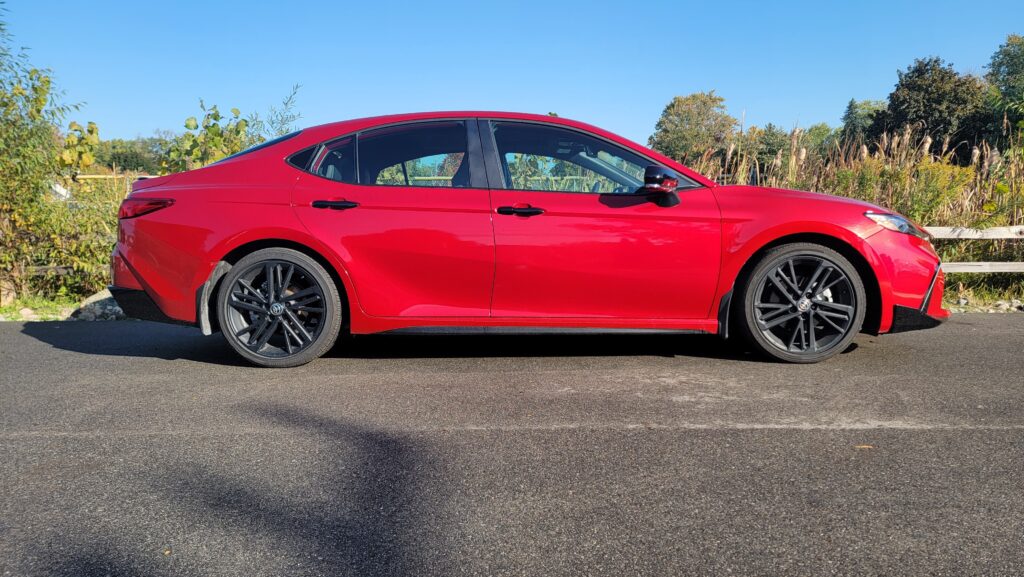
I’m what you might call an “elder” millennial. I was born in the first half of the 1980s, so I remember a lot that younger members of my nominal generation might not, like Betamax, rotary phones, and the heyday of the four-door sedan. The 2026 Toyota Camry I just drove had me thinking about how we got here—and how much I sometimes miss the “good” old days.
The demise of the sedan seems strange to me, at least on the surface. Sure, automotive trends come and go, especially among family trucksters. My parents came up in the age of the station wagon, which the one-two punch of malaise-era fuel prices and the minivan’s arrival booted out of the zeitgeist. Through it all, the old-fashioned family sedan held its anchorage in our collective psyche.
That is, until the rapidly multiplying herd of crossovers stampeded over it all. Wagons, vans, and sedans alike were summarily replaced by overblown hatchbacks, mutated by a regulatory environment that encouraged automakers to pump more and more truckiness into everything. That framework has since been tossed, but the damage is already done. And while automakers may not have a regulatory incentive to build efficient cars right now, they’re certainly feeling pressure to deliver them to cash-strapped customers flocking to fuel-efficient vehicles.
If there was any question about whether the Camry’s hybrid powertrain would keep it relevant when saying “EV” out loud could be considered treasonous in some areas, its 2026 sales have put the issue to rest. Volume is up more than 11% so far this year, and at this pace, Toyota could move 350,000 of them before 2026 is out.
Toyota loaned me a Nightshade Edition with little else on it, priced just under $39,000. That’s not cheap by my millennial standards, but it’s not bad for today’s market. Upgrades include the 12.3-inch touchscreen ($735), cold weather package ($500), and power moonroof ($870), plus a few other add-ons. All-wheel-drive was not one of them.
Nightshade is supposed to be the fun Camry, per se, and unless you live someplace where traction is a regular concern, the front-wheel-drive spec should be the best of the bunch. The suspension is tuned stiffer than the standard Camry’s, and the 19-inch wheels firm up the ride even more. The result is quite pleasant. I don’t know if I’d call it sporty, but it feels far more buttoned down than the base car—without any real uptick in passenger discomfort.
With 3,500 pounds to lug around, the Camry’s 225-horsepower hybrid system isn’t outmatched, but it won’t overpower the chassis either. The Camry’s electric motor delivers plenty of oomph right off the line. That assertiveness fades as you gain speed, but the Camry still gets out of its own way when you need it.
Just a few years ago, Toyota’s infotainment and connectivity solutions were abysmal; today, they’ve improved significantly. Phone connection is a breeze, even on Android, and the almost imperceptibly shallow phone charging tray works much better than you’d expect.
The biggest negative to driving a Camry? Being stuck behind an endless parade of elephantine utility vehicles with tinted rear glass. There’s one reason the old days were actually good: you could see more than a car length ahead.
Whatever you do, and wherever you look, everything in the Camry is just right. Maybe that’s why it’s still here, and so many of its former competitors are not. Is that just luck? Maybe, but with a 45 MPG on its window sticker, the Camry doesn’t need much luck to do well in this market.
I’ll have a more detailed review in the coming weeks. For now, it’s just nice to be driving something with four doors and a trunk again.
Got a story tip? Let us know at tips@thedrive.com
The post The 2026 Toyota Camry Made Me Miss Honest-to-Goodness Sedans All Over Again appeared first on The Drive.
Source: www.thedrive.com — article syndicated from the publisher’s feed; all rights remain with the original publisher.