
Rivian buys startup to turn 400,000 daily clips into 3D sims
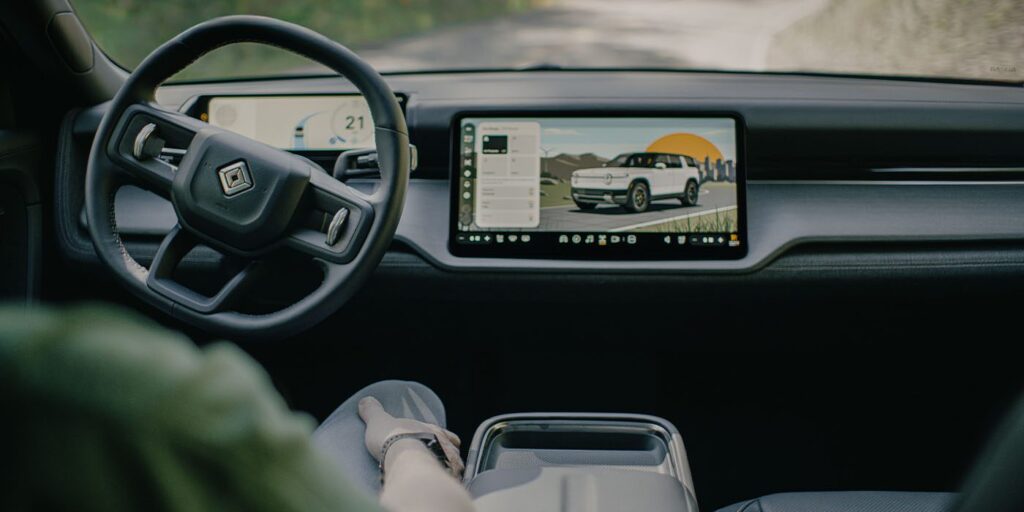
Source Rivian
Rivian wants to rebuild the roads its customers drive as 3D test worlds for its self-driving system, and it just bought a 15-person UK startup called Third Dimension to do it, as first reported by TechCrunch.
The startup was founded in 2024 by a former Tesla Autopilot simulation engineer and a veteran of Wayve’s neural simulator team. Rivian didn’t say what it paid.
Third Dimension pitched itself as a generative AI tool that builds 3D environments ready for game engines. When it raised a $7 million seed round led by Felicis in October 2024, its target customers were game studios, film, the US military, and autonomous vehicle companies.
The founders’ résumés tell you which of those Rivian cared about. CEO Tolga Kart spent more than two years at Tesla working on Autopilot simulation, after five years as a senior director on Call of Duty at Activision, and later ran engineering at synthetic data company Parallel Domain. Cofounder Piotr Sokólski spent four years at Wayve building photorealistic neural simulators for self-driving cars.
Advertisement – scroll for more content
The whole team joins Rivian’s autonomy and AI group under James Philbin. Most of them are in the UK, so Rivian also gets a bigger footprint in London.
“Simulation is central to how we train and validate our autonomous driving systems,” Philbin told TechCrunch in an exclusive interview. He added that Third Dimension “has built impressive technology that turns real-world data into detailed 3D environments.”
400,000 clips a day, few edge cases
Rivian pulls driving footage from R1S, R1T, R2, and commercial van owners who opt into camera data sharing. Philbin told TechCrunch the fleet sends back more than 400,000 sequences every day.
But the vast majority of that footage is boring. The events that actually break self-driving systems, like a mattress in the fast lane, a cop waving traffic through a red light, or a kid running out between parked cars, are rare. You can wait months for your fleet to catch enough of them, or you can rebuild real scenes in 3D and change the variables yourself. That’s the pitch here.
Rivian isn’t first. Waymo unveiled its Waymo World Model, built on Google DeepMind’s Genie 3, back in February to generate scenarios its cars have never seen. Tesla has shown off its own neural “world simulator” for FSD as well.
The Uber clock is running
Rivian needs this to work fast. Uber agreed in March to invest up to $1.25 billion in Rivian to deploy R2 robotaxis, but only $300 million comes up front. The rest is tied to autonomy milestones, starting with 10,000 driverless R2s on Uber’s network in San Francisco and Miami from 2028.
On the consumer side, the timeline has already slipped once. Rivian’s point-to-point driving feature goes to a small group of invited Autonomy+ owners later this year, and those testers have to sign an NDA. “Eyes-off” driving, which RJ Scaringe promised for 2026 back in January 2025, is now a 2027 target, with Level 4 planned for 2028 on the Gen 3 hardware Rivian showed at its AI & Autonomy Day.
Electrek’s Take
We don’t have all the details, but this looks like a good deal. It’s small and targeted, and it buys a team that has already done this exact work at Tesla and Wayve. For a company with a fraction of Tesla’s fleet, getting more out of every clip it collects is the right bet, and Waymo going down the same road tells you the leaders agree.
But simulation is a training and testing tool. It isn’t proof. A system can ace millions of generated edge cases and still screw up on a real street, and the only way the public finds out how it’s actually doing is when the company shares real-world numbers.
However, this is the best way to do a “simulation” because it doesn’t create a fake world with simulated physics; it reconstructs a real-world scene based on real-world data. It’s still a simulation and not as good as the real thing, but it’s as close as it gets.
If you’re buying an EV, powering it with home solar can cut your fuel costs to nearly zero. With electricity rates up almost 10% last year and expected to keep climbing, going solar is one of the best ways to protect yourself against rising costs. And with lease and PPA options, you can do it with zero upfront cost and start saving immediately. If you want to find the best deal, check out EnergySage. It’s a free service with hundreds of pre-vetted installers competing for your business, so you save 20 to 30% compared to going it alone. No sales calls until you pick an installer. Get your free quotes here.
Source: electrek.co — article syndicated from the publisher’s feed; all rights remain with the original publisher.