AVL and VisIC move GaN traction inverter from test bench to vehicle demonstrator
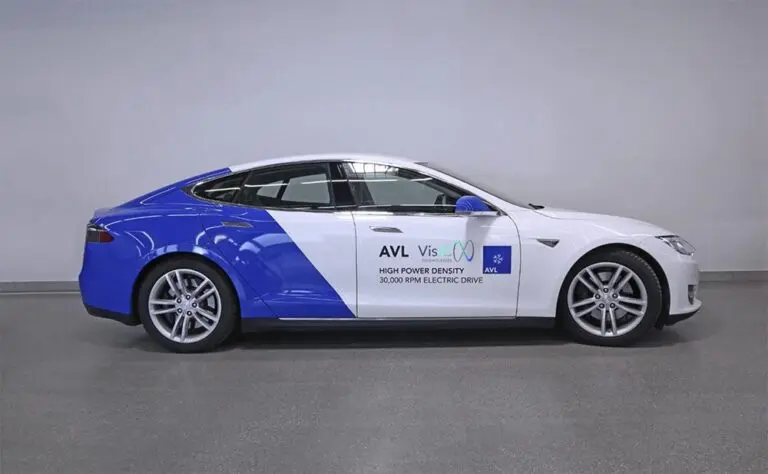
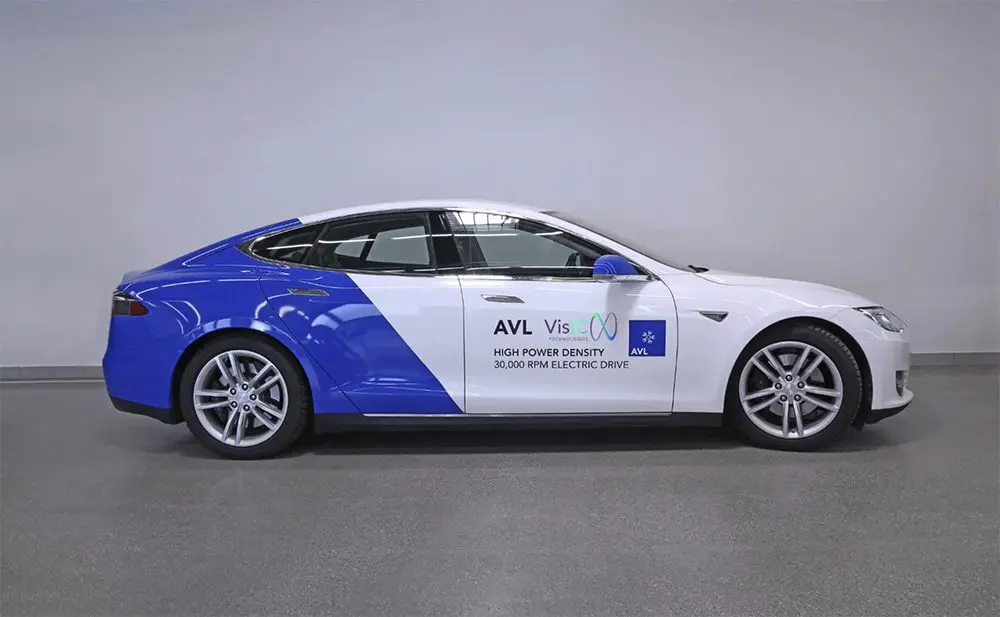
Gallium nitride (GaN) semiconductor developer VisIC Technologies and mobility technology company AVL have integrated VisIC’s D³GaN power modules into the traction inverter of an AVL vehicle demonstrator.
The demonstrator, a platform for evaluating electric propulsion technologies, combines the GaN inverter with an e-axle, power electronics and vehicle control technologies. The project includes technology from AVL, NXP Semiconductors and VisIC.
The companies say that in earlier WLTC drive-cycle testing on AVL’s e-motor test bench in Germany, an inverter using VisIC’s D³GaN technology achieved 99.67% efficiency at 10 kHz and more than 99.8% at 5 kHz. They say the inverter showed an improvement over comparable SiC inverters and a reduction in inverter energy losses of more than 60% under the tested conditions. The inverter was developed with an NXP driver, AVL’s PI850e Inverter Development Platform and AVL control software.
VisIC’s D³GaN technology is designed to combine low switching and conduction losses with high power density for high-power automotive applications. Reducing switching losses during partial-load operation can improve inverter efficiency and reduce cooling requirements.
AVL and VisIC previously announced plans to extend VisIC’s GaN-on-silicon platform toward 800 V power modules for higher-voltage battery and drivetrain systems. The companies say the GaN-on-silicon approach can use established silicon manufacturing infrastructure and is compatible with 200 mm and 300 mm silicon foundries.
“Bringing D³GaN from the test bench into a fully operational vehicle is an important milestone for high-power GaN,” said Tamara Baksht, CEO of VisIC Technologies. “The AVL demonstrator shows that GaN is no longer limited to discussing future potential. We can demonstrate the technology in the traction inverter of a real electric vehicle and show automotive manufacturers what higher efficiency, lower losses and higher power density can mean at system level.”
“Integrating a GaN traction inverter into a vehicle demonstrator is an important step in understanding the opportunities and challenges of bringing this technology into future automotive applications,” said Mathias Deiml, Technical Lead GaN Inverter Development at AVL Software and Functions.
Source: VisIC Technologies