Tesla makes another joke of its Robotaxi geofence expansion
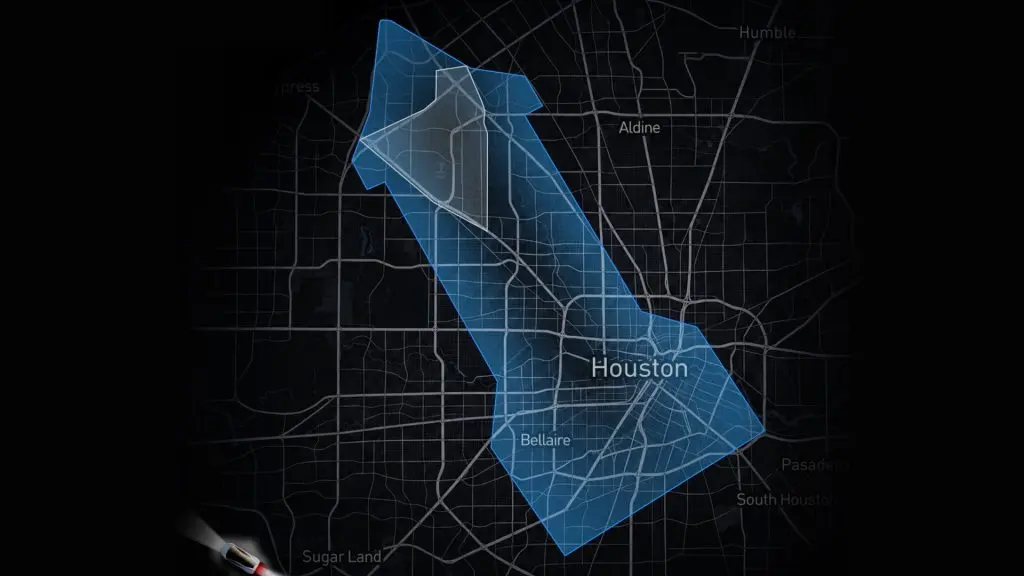
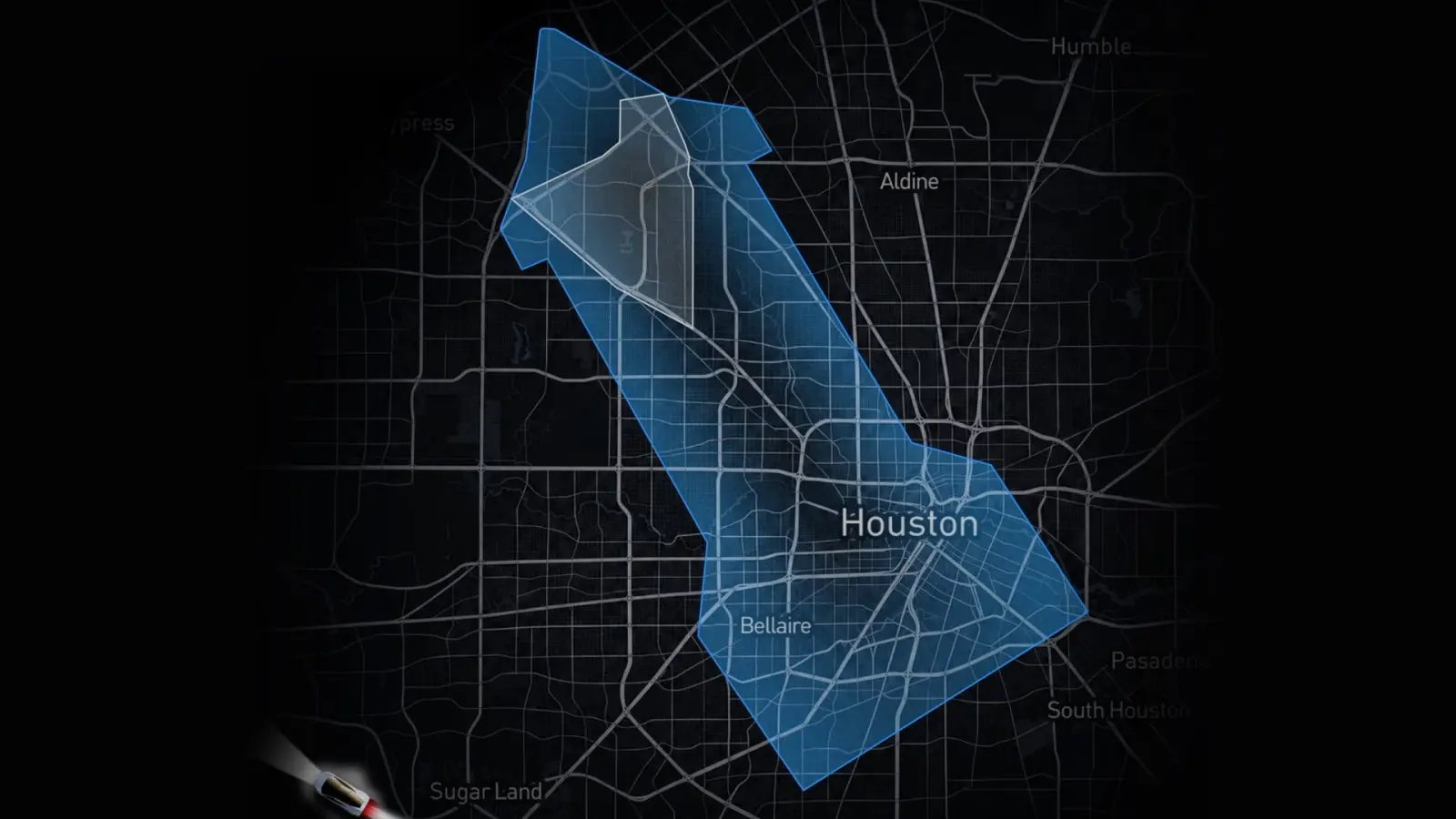
Tesla expanded its Robotaxi service area in Houston today, and it shaped the new geofence like a rocket. Plenty of people on X see something else in it, which is fair given the phallic Austin map Tesla posted in 2025.
It’s a cute nod to Houston’s space history. It’s also a service area drawn for a meme, and Robotaxi Tracker counts only 34 driverless Model Ys to cover it.
Tesla’s official Robotaxi account announced the expansion on X this morning with “Houston, we have liftoff” and a map comparing the old and new geofences:
When Tesla launched in Houston in April, the service covered a small zone of about 25 square miles in northwest Harris County, around Jersey Village, Willowbrook and a stretch of FM 1960. It was miles away from downtown Houston.
The new geofence turns that zone into the nose cone and adds a long body running southeast to downtown and Bellaire, where it flares out into fins. Pair that with “Houston, we have liftoff,” a riff on the famous Apollo 13 line, and the theme isn’t subtle.
Tesla has done this before
The problem is that a long rocket drawn diagonally across a map also looks a lot like something else, and Tesla has been here before. In July 2025, less than a month into the Austin pilot, Tesla expanded its Austin geofence into a shape that people immediately compared to a penis. Instead of shrugging it off, Elon Musk leaned in:
That post got about 30 million views. It didn’t age great either. Days later, Waymo expanded its own Austin territory to 90 square miles and was running roughly 100 times more vehicles than Tesla, as we reported at the time. Tesla still had employees riding in every car back then.
Big map, small fleet
Robotaxi Tracker, which crowdsources sightings of Tesla’s Robotaxi vehicles, now lists Tesla’s Houston service area at about 254 square miles, roughly 10 times the launch zone.
The fleet hasn’t grown nearly as fast. The tracker counts 34 unsupervised Model Ys in Houston, up from 22 three months ago, and no Cybercabs yet. That works out to about one car for every 7.5 square miles.
That’s the same pattern we saw in Austin earlier this year, when Tesla expanded “Robotaxi” to the entire Austin metro with only ~20 vehicles. To be fair, Austin has since caught up: the tracker now counts 397 driverless vehicles there, more than half of them Cybercabs.
Waymo has run fully driverless rides there since February and roughly doubled its Houston service area to nearly 50 square miles in May, ahead of the World Cup.
Electrek’s Take
Why? There’s no logic in making the service area in this shape. Why not just make it where you think it is safe and useful to operate? All for a joke? It makes no sense to me.
During Tesla’s earnings call last week, the company again made it clear that safety is its biggest bottleneck for Robotaxi expansion. Tesla still limits itself to lower-speed roads and avoids more complex environments; even train crossings have been an issue.
Because of that, geo-fenced areas only tell part of the story. You can now order a ride within this area, but that doesn’t mean Tesla can operate efficiently there.
It is limited by the number of vehicles in operation at any given time and the routes those vehicles take. Otherwise, Tesla would have bigger exposure to potential crashes.
If you’re ready to ditch gas for an EV, powering it with home solar can cut your fuel costs to nearly zero. With electricity rates up almost 10% last year and expected to keep climbing, going solar is one of the best ways to protect yourself against rising costs. And with lease and PPA options, you can do it with zero upfront cost and start saving immediately. If you want to find the best deal, check out EnergySage. It’s a free service with hundreds of pre-vetted installers competing for your business, so you save 20 to 30% compared to going it alone. No sales calls until you pick an installer. Get your free quotes here.