
The challenge: More features, more complexity
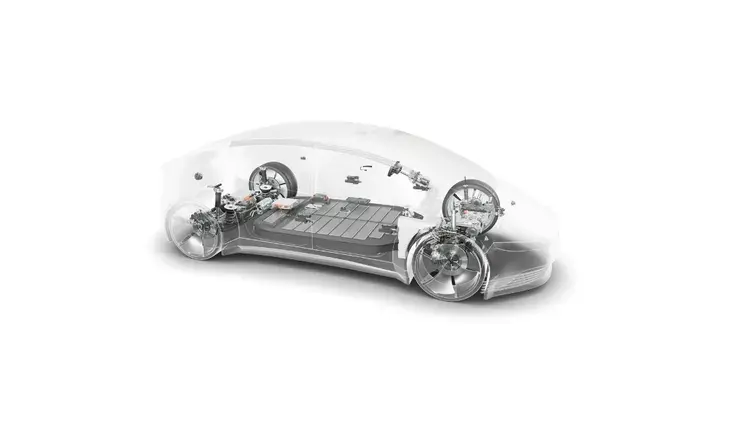
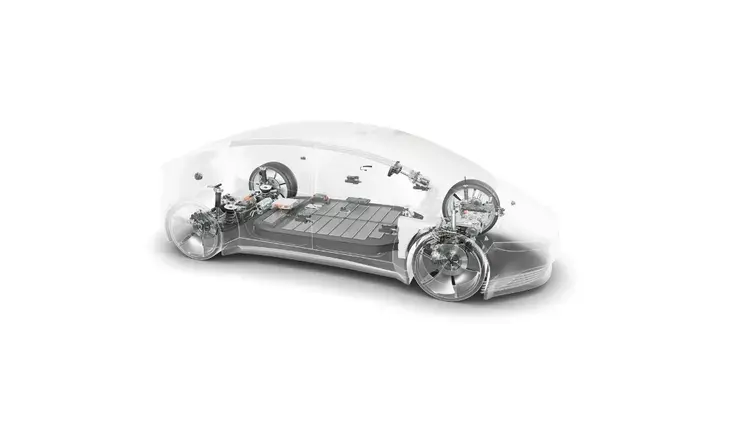
Today’s vehicles are expected to do more than ever before.
Consumers want advanced driver assistance features, seamless connectivity, over-the-air updates, improved efficiency, personalized experiences and increasingly sophisticated, electrified powertrains. For OEMs, delivering all of these capabilities has traditionally meant adding more electronic control units, wiring and software stacks.
The result? Greater complexity, higher costs and longer development cycles.
For decades, vehicle innovation was largely driven by hardware. Every new function often required its own controller and dedicated electronics. As systems multiplied, so did the challenges of validation, integration and lifecycle management.
But as vehicles become software-driven platforms, that approach is reaching its limits.
The solution: Software-defined vehicles
A new generation of software-defined vehicle architectures is transforming how vehicles are designed, built and continuously improved.
Rather than relying on dozens of independent controllers, software-defined vehicles centralize computing power and connect vehicle systems through streamlined zonal networks. Functions that once required separate hardware can be managed through scalable software running on high-performance computing platforms.
This shift allows OEMs to add features, enhance performance and deliver updates throughout a vehicle’s lifecycle without extensive hardware changes.
Bringing centralized intelligence to the vehicle
Making software-defined vehicles a reality requires more than a powerful processor. It requires coordinated integration across software, electronics, sensors, actuators and vehicle systems. Schaeffler’s centralized motion approach brings these elements together.
At the center is a scalable high-performance computing architecture capable of supporting multiple vehicle functions from a single customizable platform. Sensors and actuators serve as the connection to the physical vehicle, while zonal controllers and centralized computing enable real-time coordination across systems.
By reducing the number of controllers, interfaces and wiring connections, automakers can simplify vehicle architectures while creating a foundation for future software innovation.
The benefits extend beyond design simplification. Centralized architectures can accelerate software deployment, streamline variant management and reduce duplicated development efforts across vehicle programs.
Reimagining actuation and control
As computing becomes centralized, vehicle hardware can become simpler and more efficient.
Schaeffler is helping shift intelligence away from individual devices and into centralized computing platforms through innovations such as remote-control protocols and microcontroller-less actuators. Instead of performing complex processing locally, actuators can operate as streamlined interfaces connected through Ethernet-based networks.
This approach supports faster software updates, simplifies integration and improves scalability while maintaining the responsiveness required for critical vehicle functions.
The challenge of electrification
Electrified powertrains introduce another layer of complexity.
Traditional electric vehicle architectures often rely on separate systems for traction inverters, onboard charging, fast-charging and low-voltage power conversion. Each system requires its own components, packaging space, cooling resources and integration effort.
For manufacturers looking to reduce cost and complexity, functional integration becomes increasingly important.
The solution: More capability, fewer components
Schaeffler’s SuperBox concept takes an integrated approach to power electronics.
By combining multiple functions into a single architecture, the system reduces the need for separate hardware while making more effective use of existing components. Motor windings can be used for charging, traction inverters can be repurposed during charging operations, and power conversion functions can be consolidated within one highly integrated unit.
The result is a more compact architecture designed to reduce component count, packaging requirements and system complexity while maintaining flexibility across different vehicle configurations.
Whether supporting 400- or 800-volt systems, single-drive or dual-drive platforms, the modular approach allows manufacturers to adapt solutions to their specific requirements.
Advancing performance through power density
As software-defined vehicles continue to evolve, power electronics must deliver more capability in less space.
Schaeffler’s latest multi-traction inverter platform is designed around that objective. Leveraging advanced electronics, embedded circuit board technology and a scalable hardware-software foundation, the platform supports a wide range of applications including battery electric vehicles, hybrids, range extenders and commercial vehicles.
The broader goal is clear: create reusable, scalable technologies that help automakers bring products to market faster while improving efficiency and reducing system complexity.
Building vehicles that evolve over time
The transition to software-defined and eventually AI-defined vehicles requires a new way of thinking about vehicle architecture. Success comes by effectively integrating intelligence across the vehicle as opposed to adding additional hardware.
By combining centralized computing, integrated power electronics, advanced actuator technologies and scalable software platforms, Schaeffler is helping manufacturers create vehicles that are smarter, simpler and designed to evolve throughout their lifetime.
The future of vehicles lies in simplifying complexity, and Schaeffler excels in doing this by combining extensive automotive expertise with innovative technology.