
Electric truck charging needs more than megawatts: Q&A with Rustam Kocher
Electric truck pioneer Rustam Kocher considers the state of the e-truck art
Rustam Kocher might be described as the elder statesman of electric trucks. Back in 2021, he was the Charging Infrastructure Lead at Daimler Trucks North America, and also the Chair of CharIN’s Megawatt Charging System (MCS) task force. On his watch, Daimler collaborated with utility Portland General Electric (PGE) to build a prototype truck charging station called Electric Island (see our January/February 2021 issue).
Mr. Kocher has retired to a beautiful historic city in Portugal, but he remains quite active as an advocate for electric trucks, and especially for building the charging infrastructure that’s required. Since we last spoke (see our April/June 2023 ish), there are a lot more electric trucks on the roads, and we’ve seen a lot of changes on the EV scene, so we reconnected with Rustam for an update on the latest trends. One thing has not changed: heavy-duty EVs need purpose-built charging stations, and Rustam’s going to keep chanting “Truck Charging Needed” until they get rolled out.

Charged: The last time we spoke, way back in ’23, public charging for heavy-duty EVs was a new thing. Now it seems to be a hot market. You sent me a list of a couple dozen companies that are in the biz, or trying to be—though you did note that the segment is “prone to frequent new market entrants, consolidations and failures.”
Rustam Kocher: That industry has a lot of potential. The two main providers are WattEV—I’m on their Advisory Board—and Terawatt. Right now, not a lot of fleets are spending heavily on electrification, but the providers that are staying alive are offering trucking-as-a-service or charging-as-a-service so that fleets can nibble at it at their own pace.
Charged: Things may heat up soon. WattEV recently ordered 370 Tesla Semis, then Einride topped that with a 500-unit order, and now we hear that a somewhat mysterious consortium of shippers wants to order 2,500. Can Tesla produce that many trucks?
Rustam Kocher: I think build capacity will be a potential issue, but it’s a better problem to have than a lack of orders, which is what the legacy OEMs are facing.
You can’t pull a big rig into a standard light-duty charging site and charge.
Charged: The Megawatt Charging System (MCS) was a brand-new thing three years ago. Are we seeing some widespread adoption yet?
Rustam Kocher: Yes. MCS recently became a fully published standard just like CCS—not only the connector itself, but the entire protocol and everything that goes into it. Anybody can put it on a truck, anybody can put it into a charger.
When we dove into this in 2018, we thought we were devising a fast charging standard for commercial trucks. Well, it’s now clear that it’s for anything that rolls, digs, floats or flies. It can be an excavator, a ferry or an eVTOL.
For marine, it makes it a much cheaper proposition to go electric. Before, if you had a ship you wanted to electrify, you had to order a bespoke design. It cost a lot of money, and then if it broke, you’d be down for days, if not weeks or months, because the only folks that could repair it were the ones that made it. But with MCS, you can order an MCS charger from 30 different vendors and it can be maintained on the spot. We’ll start to see ferries go carte blanche electric because the operating costs are so much lower.
Charged: There are 30 charger manufacturers that are offering MCS hardware now?
Rustam Kocher: At least.
Charged: What about on the vehicle side? Are we seeing many OEMs offering MCS?
Rustam Kocher: Yes. In Europe, Mercedes has it, Volvo has it, TRATON brands has it, and series production is either in planning or happening with all the major manufacturers.


Charged: Speaking of the European truckmakers, I know I’m not the only one who thinks the things they’re doing and saying are crazy. The Chinese truckmakers are moving into Europe. They’re in position to grab a big piece of the market and everybody knows it, but the European truckmakers continue trying to water down regulations and delay electrification. What are they thinking?
Rustam Kocher: I don’t know. I have the same reaction as you. Every one of the CEOs of the legacy truck manufacturers just went on stage at IAA and begged for a three-year delay on the current regulations that they had already begged a delay for once, and that they had already agreed to when they were put in place five years ago.
You and I lived through this electrification transition in the light-duty industry. What did the OEMs do when they couldn’t hit their numbers in California? They offered lower-cost vehicles, specifically on lease. You could get a Nissan LEAF for 100 bucks a month or less. They lowered the prices so they could hit the targets because they had fleet emission regulations to meet. Why can’t the truck manufacturers do that?
They’ve specifically avoided that topic. They don’t even speak of it, but they say, “Conditions aren’t conducive to us hitting our numbers, we must dial back and slow-walk everything.” Meanwhile, you’ve got at least four Chinese manufacturers that are going to be producing or are already producing and delivering trucks throughout Europe. It makes no sense.
A lot of fleets that buy trucks are really big, but the majority are only 10 trucks or less. Those guys need some clarity—what’s this vehicle going to cost us, and how do we make any sort of financial estimates?
Charged: Tesla’s getting ready to start selling Semis in Europe too.
Rustam Kocher: Yep.
Charged: Another thing they’re saying is, “We can’t sell any electric trucks because there’s no charging.” They think Europe needs 35,000 chargers, and they want governments to pay for it.
Rustam Kocher: They pulled that number straight out of their ear, but the number that ICCT estimates is closer to 5,000. Yes, we need more truck charging. You can’t pull a big rig into a standard light-duty charging site and charge. It’s physically impossible in many cases. I agree with that, but there’s no reason why you can’t convert fleets that are doing out-and-back routes or depot-to-depot routes. There are routes that are feasible, and fleets are using existing infrastructure that’s in place already.
The European OEMs have been doing a great job with truck charging network Milence, I will give them that. Milence has the best truck charging sites we’ve seen, and they’re building them out quickly. Do they have enough in place yet? No, but they seem to be moving quickly to build more.
We’re seeing more movers in that space as well. Granted, a lot of them are up in the Nordics, but that’s where the bulk of the trucks are. We’re seeing them start to come down south as well—Holland, Northern Germany. As the truck population grows, so will the infrastructure.
Charged: The OEMs are also rolling out new models.
Rustam Kocher: They’re announcing new, more capable vehicles that are capable of doing more weight, and more range, then they cry, “Oh, we can’t meet the numbers.” Lower your prices!
Charged: I suspect that there are pro-EV and anti-EV parties at every automaker, eternally vying for mastery.
Rustam Kocher: That’s very much the case. At some of those companies, the old school is winning the turf war, and at others the new guys are winning. You’re seeing TRATON and Volvo make some great advances. Not so much at PACCAR, Navistar. Those guys are dragging behind, and are going to be paying for it with market share.
Charged: Automakers have invested a lot of money in engine plants, and they don’t want to strand those investments. I don’t know how it is with the truckmakers, but when it comes to the US automakers, engines are almost all they build anymore, right?
Rustam Kocher: Really, the only IT and core capability that a lot of these OEMs have is the technology that goes into how the engine is built—not even in building the engine itself in many cases. The other factor is that many of these manufacturers make a huge portion of their income from aftersales. At the major truck manufacturer I used to work for, about 50% of profit came from aftersales. And guess what doesn’t make a lot of money on aftersales? Electric vehicles.
Charged: Some automakers have this idea that they’re going to charge buyers a subscription fee for this and that, and I don’t think that’s going to fly.
Rustam Kocher: It seems that they’re trying to extract as much profit out of the businesses as possible. You see the stock buybacks at GM, Ford, Daimler, and it doesn’t make sense. They should be investing that money back into the business to try and catch up with electrification, but they’re not.
If you can put in a BESS, you can make do with a two- or a three-megawatt grid connection and just use that as your reserve power.
Charged: What’s California Senate Bill 1213 all about?
Rustam Kocher: It’s designed to provide clarity on the sticker price of the trucks. Since electric trucks started to become available in 2021, 2022, nobody’s been clear as to what the actual cost of the units are.
The only company that has published their prices has been Tesla, and now that they’re actually selling it, they’ve kind of covered up their prices too. It would be better for the consumer to have an open market. A lot of fleets that buy trucks are really big, but the majority are only 10 trucks or less. Those guys need some clarity—what’s this vehicle going to cost us, and how do we make any sort of financial estimates? Right now, none of them can do that because they don’t know what the actual vehicle cost is.
Charged: So the new law is good for smaller fleets because they get more price clarity?
Rustam Kocher: I think it’s good for everybody. You only have an active market when information’s available to everybody, and right now it’s not. It’s really good for the small fleets because typically they’re takers instead of makers on price, whereas the large fleets will negotiate a special price with the manufacturer. If you’re buying 1,000 trucks, you kind of get to set your own price.
Charged: It’s good for taxpayers too, because it prevents the companies from fiddling the subsidy money and pocketing half the profit. Wasn’t that part of the impetus for the bill, to make sure that those subsidies were being passed on to buyers?
Rustam Kocher: Yes, 100%. It was far too easy to set the price in such a way that they could make sure they made all the profit.
Charged: Is this an issue in Europe also?
Rustam Kocher: Yes, but I think it’s rapidly going to go away as an issue in Europe because of the Chinese truckmakers coming in and being very clear on price. I think price is going to be communicated clearly to the entire market, just as it is for light-duty cars, because the Chinese are going to compete on price and they’re going to publish price lists for their trucks in every market.
You can pull the truck straight in, you plug in, there’s amenities for the driver—showers, food, restrooms—so that while the truck is charging, they can take their break and then off they go.
Charged: We’ve been talking about the European truck market. It seems to me that in the US auto and truck markets, there’s political coercion going on. I see these automakers canceling programs, writing off billions. These can’t be good long-term decisions for the companies. What’s behind their decision-making?
Rustam Kocher: I don’t think anybody really knows. Billions in write-offs, and battery factories and new technology development that’s all been shuttered. It boggles the mind. You can’t run a company with constant swings from opposite poles every four years. If you’re going to keep a company profitable and keep it relevant, one would think that you set a strategy and you follow that strategy regardless of what the political winds are. We’re not seeing that right now.
Charged: Is there a certain amount of that going on in Europe too?
Rustam Kocher: Much less. There’s no major political party in the world outside the Republican Party that refuses to acknowledge the reality of climate change. Even the right-wing parties in Europe recognize that climate change is a thing and we need to combat it. It’s much less a political football.
What we are seeing in Europe, as well as Asia, South America and Africa, is that with this massive price swing due to the Gulf War, the prices of diesel and gas have gone through the roof, and electric car sales have spiked as a result.
I have relatives in Indonesia that I never thought would be interested in electric cars, and suddenly they’re all driving electric cars. The only markets that seem to be lagging are Japan and the US, and I can’t explain either one.
Charged: The irony is as thick as bunker oil.
Rustam Kocher: Isn’t it? This guy’s done more for electric vehicles and sustainability than anything anyone else could ever have done. He blundered his way into being a sustainability savior.
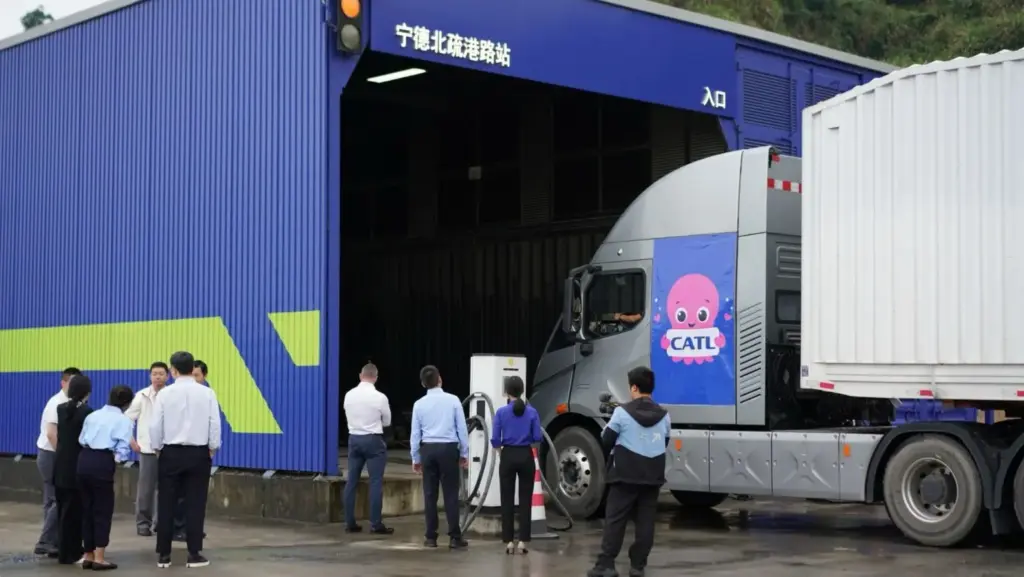
I didn’t envision what’s going on in China with CATL pushing to corner the market on swappable batteries, and how quickly the Chinese truck market has landed on LFP.
Charged: Back in ’23, you told me that commercial vehicle battery packs were tough to source for several reasons, and you foresaw that being a bottleneck. Is that still the case?
Rustam Kocher: I think it’s becoming less so. I didn’t envision what’s going on in China with CATL pushing to corner the market on swappable batteries, and how quickly the Chinese truck market has landed on LFP as the most viable chemistry. The availability of truck-sized modules and packs has grown faster than I ever hoped it would.
Those replaceable packs in China that they lift off the back of the truck and drop in behind the cab, those are about 220, 240 kWh. You’re seeing modules built at that size at scale, and those are fairly cheap. If you can package those and put them on your truck, then you can pretty quickly get up to 600, 700 kWh. I think that’s what a lot of the manufacturers are doing now, and that’s made that hurdle a bit lower than I anticipated it.
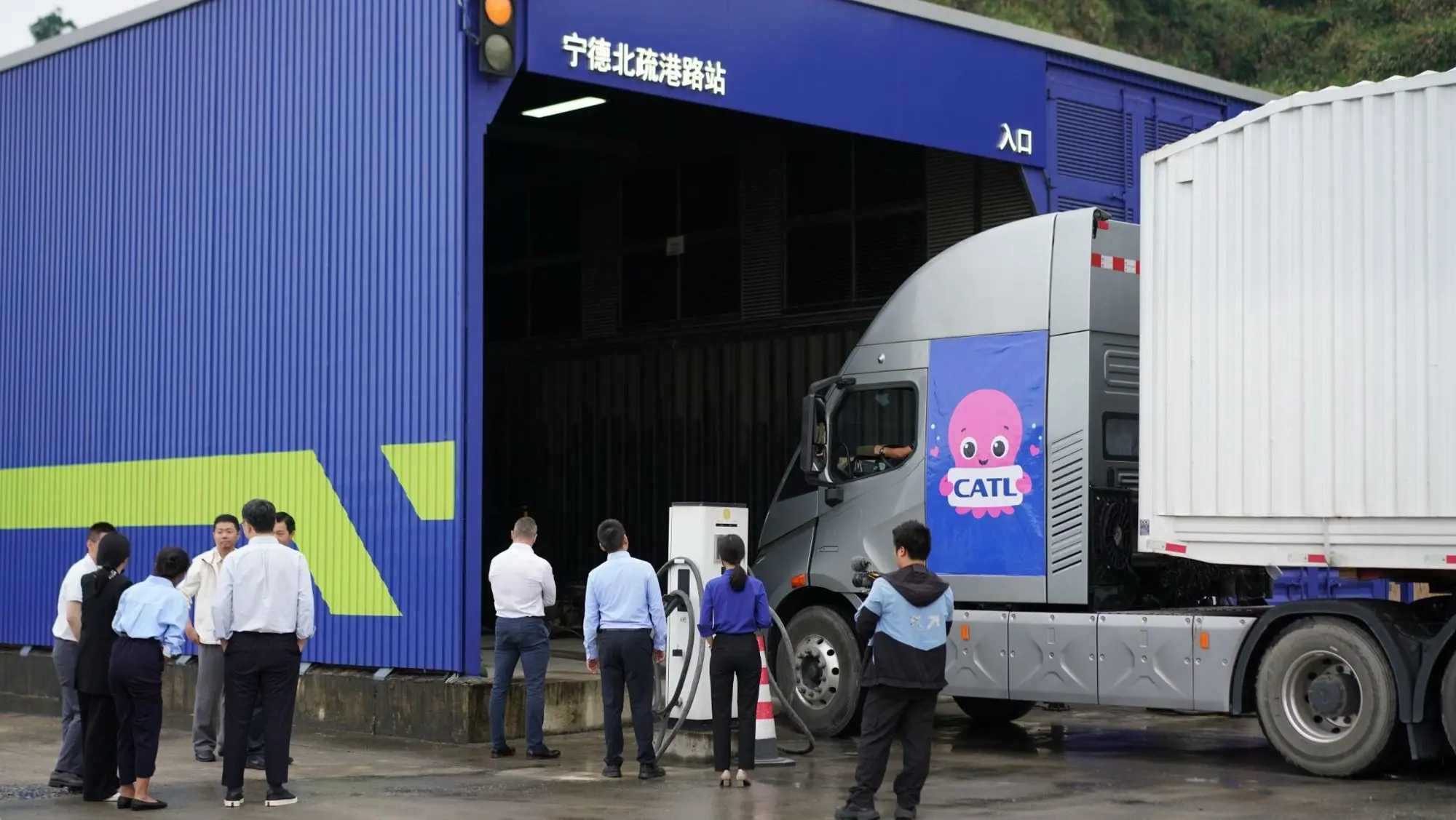
Charged: I was always skeptical about battery swapping, but they’re doing it in China. Is that something we’re going to see in Europe and the US?
Rustam Kocher: Maybe. We saw a partnership with Octopus Energy in the UK where they’re going to take on that business opportunity. Octopus has been focused in the UK. Now they’re starting to spread throughout Europe. They’re working with EV owners on vehicle-to-grid as well, and they’re providing a virtual power plant response to power markets in England.
I think their reason for trying to corner this particular market is because there’s a great opportunity to use those batteries for what Octopus is really good at, which is arbitraging power. They can fill them when power’s cheap, they can put it back into the grid when power’s expensive, and then can dispense them onto the trucks. So I think they come into this with a different view on how they want to utilize the physical battery charging units once they’re up and running.
We’re seeing a lot of truck charging sites incorporate battery storage systems for the same reasons. If you’re going to put in megawatt charging at a site and your grid connection has to be able to support it, there’s not a lot of grid connections that are available with 8 to 10 megawatts. They don’t exist. But if you can put in a BESS, you can make do with a two- or a three-megawatt grid connection and just use that as your reserve power. Then you can arbitrage the power on the BESS, so power management software incorporated with the BESS could potentially make you even more money than the charging site does. It’s a unique opportunity.
There’s a great app out there called eTrucker. He’s physically inspected every site that’s on there and said, “Yes, you can get a truck in and out.”
Charged: I saw a conversation recently about someone who pulled up a semi at a regular old public charging site, and guess what? It didn’t work. This is something you addressed a long time ago, and you built a prototype truck charging station called Electric Island. What does a truck charging site need to have that’s specific to trucks?
Rustam Kocher: A lot of things. Primarily it’s size. You’re talking about a 40-ton vehicle, in some cases 60 or more. They’ve got to be able to have the right ingress and egress to enter and exit the site, so it’s got to be able to withstand that sort of weight. It’s got to have the right height. A lot of DCFC charging sites are in parking garages or have roofs that aren’t the right height. A lot of them, the parking configuration is such that if you’re trying to bring a truck in, you’ll end up blocking other vehicles.
There’s a great app out there called eTrucker. He’s physically inspected every site that’s on there and said, “Yes, you can get a truck in and out. Yes, you can get a truck in and out with a trailer, whether you have to drop the trailer to get on the charger or not or to get into the site. And how much power is available? What’s the speed of the chargers?” Because charging a heavy-duty truck at 50 kW, it doesn’t make any sense. You want 250, 350, 400 or more.
A lot of these guys are doing dual-gun now, so you want dual-gun 350 or what have you. That’s the place we are in now. It reminds me of the early days—2012, 2013 when charging infrastructure was not standardized. You could pull up in a particular EV and the charger would cause an error because the handshake and the interaction between charger and vehicle wasn’t standardized or hadn’t been tested well enough to provide a guarantee that everything was going to work.
I think CCS2 charging in Europe for trucks works as far as the handshake and the power is concerned. I don’t think that’s a problem. I think it’s the physical size of the site that becomes the issue.
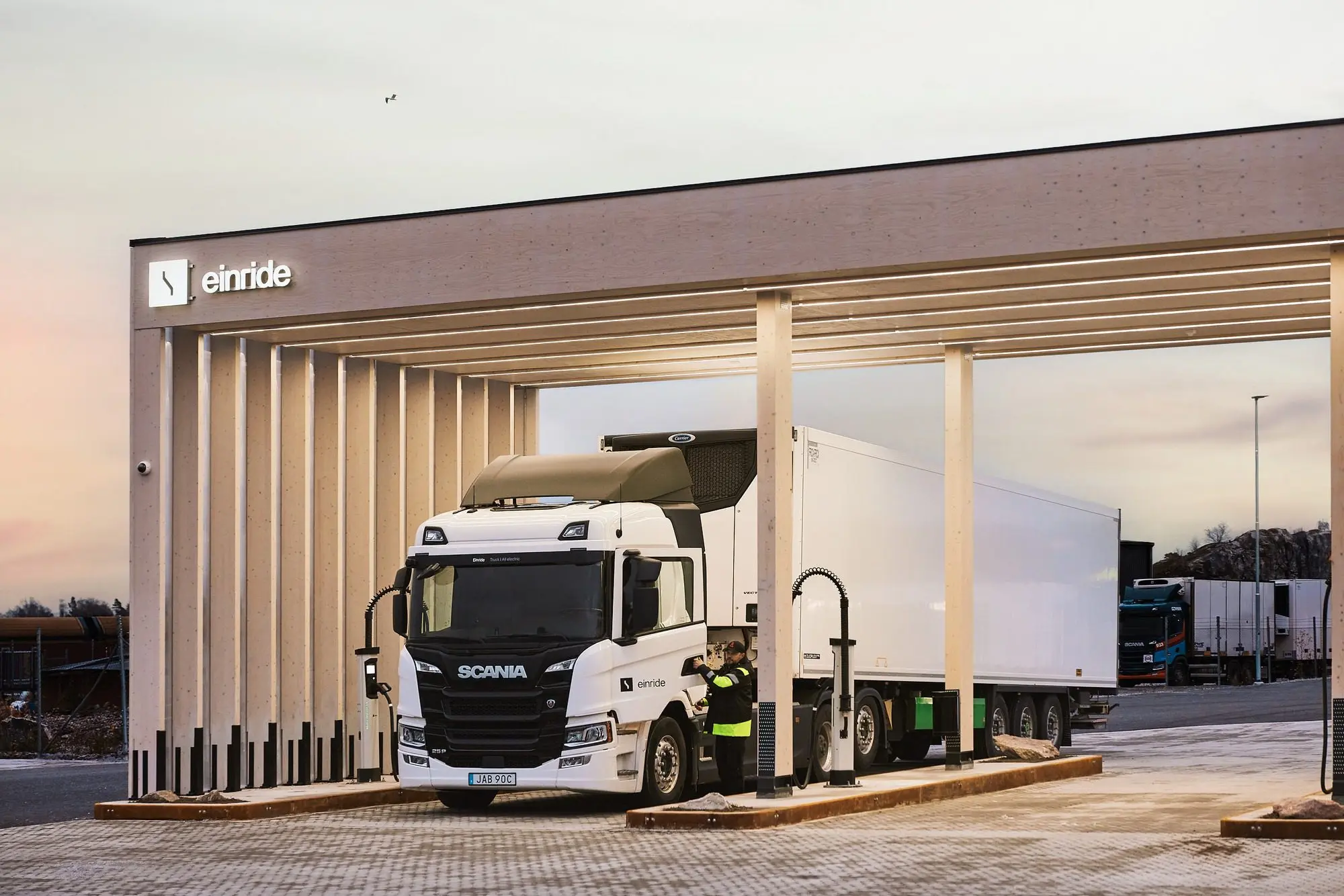
A site that’s designed specifically for heavy-duty vehicles, like Milence, solves all those problems. Einride has a bunch up in Sweden as well. You can pull the truck straight in, you plug in, there’s amenities for the driver—showers, food, restrooms—so that while the truck is charging, they can take their break and then off they go.
That infrastructure has to exist for those trucks and buses, because they can’t be mingling with the light-duty vehicles. You have truck stops for a reason. We need the same infrastructure for heavy-duty EVs as well. That’s my hashtag, #Truck Charging Needed, and I’ll continue to use it until we have enough.
Charged: Back in 2023, you mentioned the US truck stop operators Love’s, Flying J and Pilot. Those are now offering EV charging, but are they offering truck charging?
Rustam Kocher: No. Those three are not.
Editor’s note: On October 8, 2026, after this interview took place, Pilot announced that its first Tesla Megacharger site for heavy-duty electric trucks was open in Ellabell, Georgia.
Charged: Maybe they figure there’s not enough electric trucks in the US yet.
Rustam Kocher: For sure. They know exactly how much a diesel pump can make them over a 24-hour period. Right now, putting in a charger for electric trucks doesn’t have that same economic imperative, so they’re not going to do it.
Love’s and TA have done a really good job putting in light-duty charging, and I applaud them for that. They’re bringing in a different customer base—EV owners tend to be a bit more economically upscale. Cokes and smokes make all the gas stations’ money. I think the Quick Marts of the world are going to make money off EV charging folks in the same way.
An ICCT analysis said that as many as 20 to 30% of routes are TCO-positive already, and they foresee an 80% positivity by 2030.
Charged: The last time we talked, I asked, “When do you see the TCO converging for EVs and ICEs?” And you said, “My guess for commercial trucks is the early 2030s.” Still the case?
Rustam Kocher: I was wrong, because ICCT just ran a couple analyses and they see TCO positive already on many routes. Obviously, the range and the load have to be a match for the vehicle and the customer use case. ICCT has been doing some great work on the analysis, and they said that as many as 20 to 30% of routes are TCO-positive already, and they foresee an 80% positivity by 2030. So, I obviously missed the mark on that one, and I’m happy to say that.
I really think it’s that Chinese market pushing, making things a lot cheaper than anybody ever thought they would be in a much shorter timeline. China speed is happening, and it’s pushing things along faster than anybody ever thought they would.
This article appeared in Issue 77: July-September 2026 – Subscribe now.