CATL pushes ahead with 20 Ah solid-state EV batteries, with 500 Wh/kg in sight
CATL hit another milestone in its solid-state battery development, advancing to 20 Ah cells. The world’s leading battery maker aims to begin small-scale production in 2027.
CATL continues advancing solid-state EV batteries
CATL remains the leading global EV battery manufacturer by a wide margin. According to SNE Research, CATL held a commanding 39.9% share of the global EV battery market through the first half of 2026.
To stay ahead, the company is advancing several new battery chemistries, including solid-state and sodium-ion, promising to be safer, more efficient, and lower cost than traditional lithium-ion batteries.
When investors asked about the progress of its solid-state battery program on Tuesday, CATL said it continues to invest heavily in all-solid-state batteries and expects to begin small-scale production in 2027.
As it has stated before, output is expected to be limited at first as it scales up to mass production around 2030.
Speaking at the Summer Davos Forum in June, CATL chairman and CEO Robin Zeng said that, on a scale of one to nine, all-solid-state batteries have only reached level four.
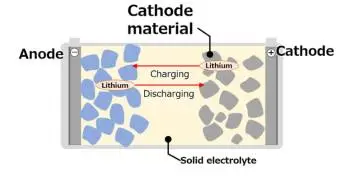
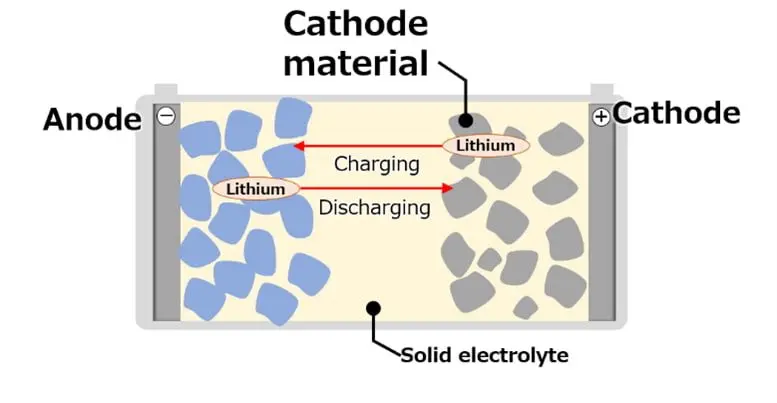
All-solid-state batteries differ from semi-solid-state batteries in that they require a solid electrolyte to conduct lithium ions, rather than a liquid.
The company uses a sulfide-based solid electrolyte system, which offers high ionic conductivity and deformability, but maintaining stable contact between solid components remains a hurdle.
CATL said its sulfide-based batteries have now entered 20 Ah trial production as it aims to achieve an energy density of 500 Wh/kg.
Trial production in 2027, reaching mass market in 2030
CATL’s 2027 timeline to begin small-scale production aligns with other automakers and battery manufacturers racing to introduce all-solid-state EV batteries.
Toyota, which has been promising solid-state batteries for nearly a decade now, aims to launch the first all-solid-state battery-powered EV in 2027 or 2028.
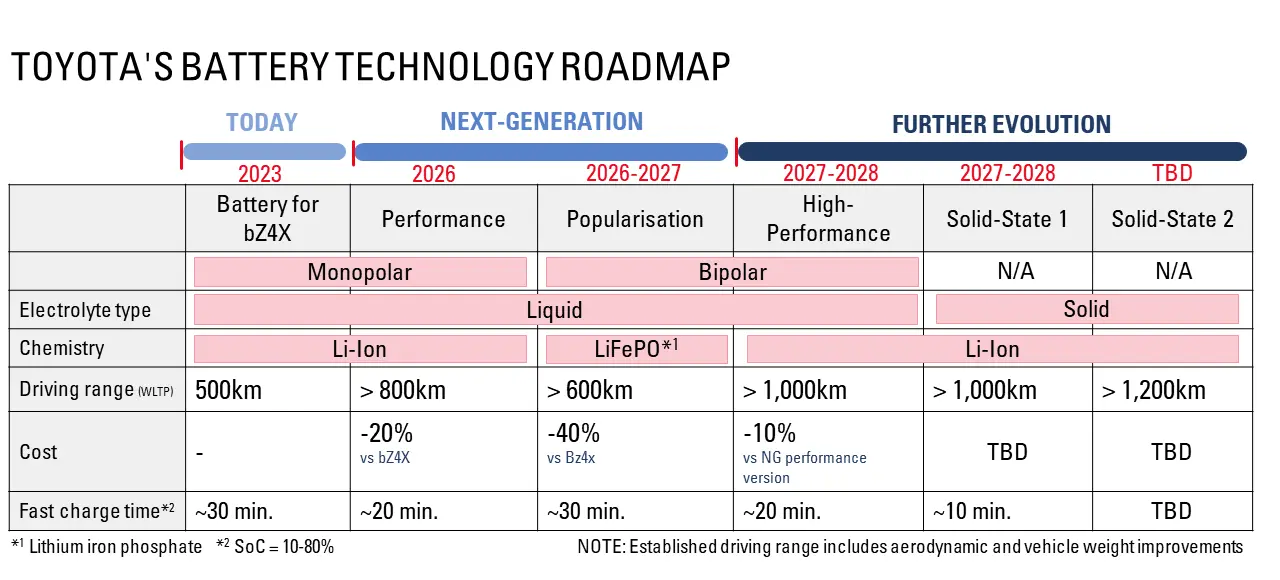
Using Sumitomo Metal Mining’s proprietary powder synthesis technology, Toyota claimed to have developed a “highly durable cathode material” for all-solid-state batteries last October. Toyota revealed a prototype last year, claiming it can deliver 745 miles (1,200 km) of range and charge in under 10 minutes.
However, like CATL, Toyota expects production to be limited and will not reach the mass market until closer to the end of the decade.
Samsung SDI, on the other hand, aims to begin mass production of its SolidStack all-solid-state batteries in the second half of 2027.
BYD, which ranks second in global EV battery sales behind CATL, also plans to launch its first solid-state battery-powered vehicle in 2027.
In an exclusive interview with Carwow.es last month, executive vice president Stella Li said BYD is in “the leading position” on solid-state batteries and will “prove that” next year.
BYD’s battery division, FinDreams, aims to begin producing sulfide-based all-solid-state batteries in limited batches in 2027, ramping up to mass production by 2030.
Electrek’s Take
While solid-state batteries are often hailed the “holy grail” of battery tech, they are only one part of the equation.
CATL, BYD, and others continue advancing lithium iron phosphate (LFP) and sodium-ion batteries, which will ultimately create more efficient, lower-cost options that offer various performance needs.
BYD’s second-generation Blade LFP batteries already deliver over 1,000 km (621 miles) of CLTC range. What’s next?
One thing is certain: New battery chemistries and evolving tech will only continue making EVs more efficient, unlocking longer driving ranges, faster charging speeds, and better performance.
Source: Autohome