
NexaMotion Group on ‘Creating More Room for Greater Expertise’
More than 100 NexaMotion Group employees are actively using AI, NMG’s CEO Neil Sethi said. Much of that use begins with analytics. CRM information that once required employees to work through large amounts of data manually can now be summarized and analyzed quickly.
“We’re trying to allow our team members to really get the busy work out of their day-to-day lives and really put their intellectual horsepower to work more and more,” he said. “Which is really great for us because they’re really the asset that we have.”
Naresh Kopparapu, NexaMotion Group’s chief information officer, grounds those projects in measurable business problems.
“We are looking at solving the customer’s problems. We have to put an AI where there’s a real cash flow or a real customer problem and see how we measure AI is able to help us with,” he said.
Sales and service calls are one example. NexaMotion can summarize and score interactions, giving leaders visibility across a volume of calls they could never review individually.
“It gives the leadership information so that they can coach at scale because it used to be very difficult to go down that level,” Kopparapu said. “With all the tools that we have, we can summarize, we can create insights with the data that we generate. It’s not sitting in a database or a spreadsheet anymore.”
That visibility supports a customer relationship that can operate across multiple forms of communication. Some shops prefer digital ordering and primarily want accurate availability and a dependable ETA for deliveries. Others want to call the person they have dealt with for years.
Billy Gwinn, executive vice president, NexaMotion Group operations and general repair sales, sees Transend eventually supporting that broader customer experience across both transmission and general repair with programs like the aforementioned Platinum Program.
“A customer may want to pay a dollar more to get the part in a timely manner versus having to wait two hours because then they have to deal with their customer who’s waiting for a part,” Gwinn said. “Ultimately Transend is the platform of the future.”
Kevin Rozsa, executive vice president of NMG mergers and acquisitions and Transtar sales, sees the same opportunity on the Transtar side. Customers who become more comfortable identifying and ordering straightforward parts through Transend give NexaMotion’s telephonic sales team additional room for consultative conversations.
“Every time a customer places an order on Transend, our sales reps are automatically notified of that order and what it is,” Rozsa said. “Our reps can then review that and then reach out to the customer and say, ‘For this application have you considered these other items? Because these are important items to use in a complete rebuild.’”
Sethi sees that idea expanding much further as AI becomes better at connecting large datasets. Diagnostics, repair information, procurement, sourcing and planning all produce information. Connecting those systems could give participants throughout the supply chain a clearer view of what is happening and what actions to take.
“A lot of the data was already analyzed before the meeting,” Sethi said, describing a recent conversation with a key partner. “Now we’re talking about affecting the interworking relationship. So, they could take their datasets that have given them information and ours to, like, make change happen.”
The people in the room still determine where to go next.
“We’re going to have to use our intelligence, our knowledge, our expertise and trust,” Sethi said. “Trust is not going to be AI driven.”
For all of NexaMotion’s investment in systems capable of seeing across thousands of products and customer interactions, Sethi continues to look for information at its most immediate source: The shop.
“I think any executive leadership team can get really entrapped in conference rooms. Literally, all day, every day, forever,” Sethi said. “At NMG we want to be in the field with the shops, understanding what they’re doing, understanding what they’re seeing.”
Technology gives NexaMotion more ways to see that future taking shape. The work comes in translating those signals and the intel they produce into something useful for the technician, the customer, the employee and, ultimately, the repair and parts requirements in front of them.
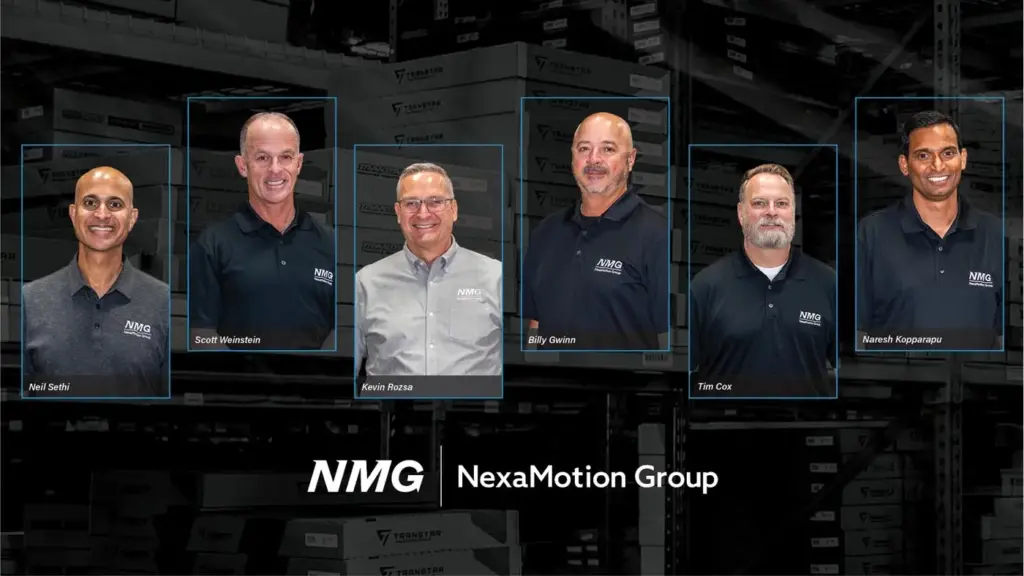
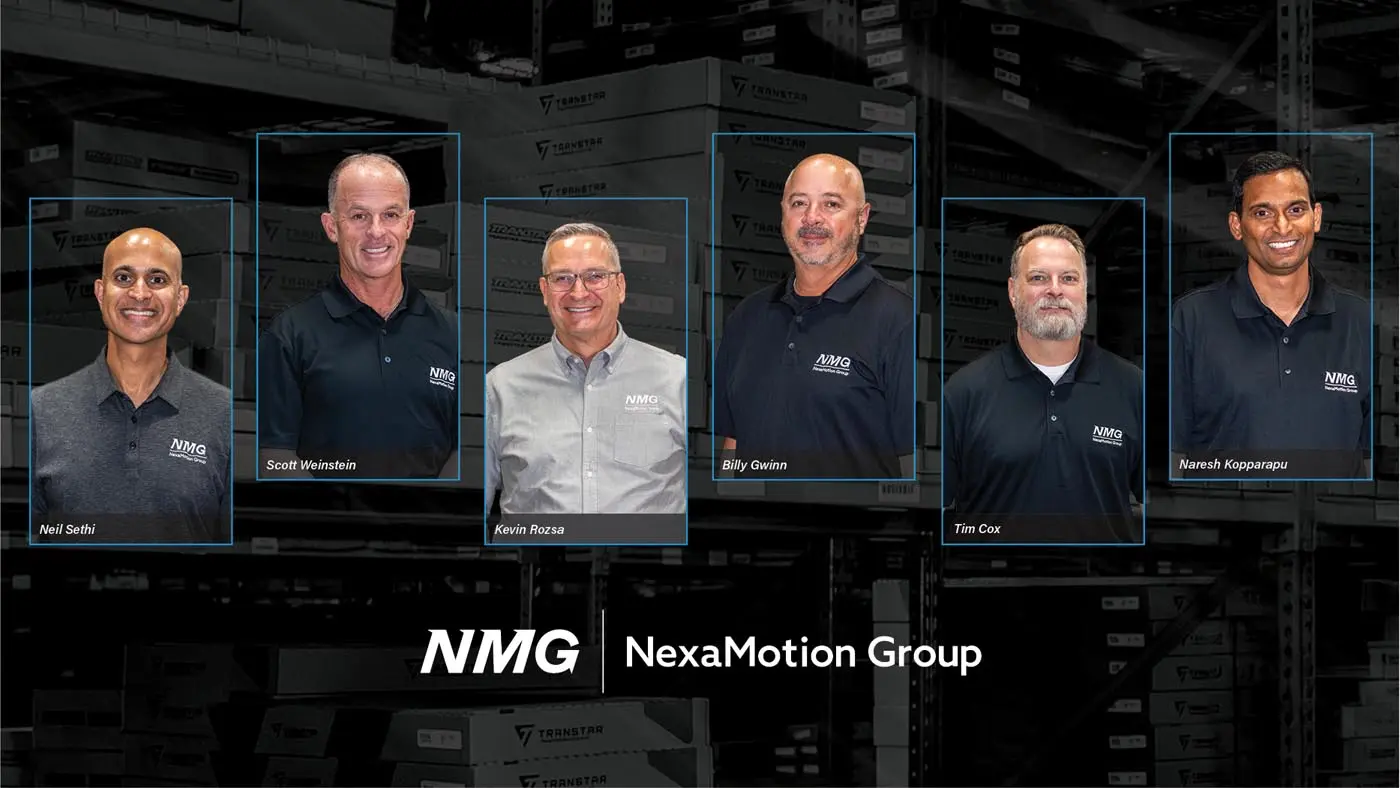
Pictured: The NMG team (left to right): Neil Sethi, Scott Weinstein, Kevin Rozsa, Billy Gwinn, Tim Cox, Naresh Kopparapu.
Please note: This article concludes the 3-part NexaMotion Group article series.
Part 1, NexaMotion Group on ‘Making Smarter Connections,’ can be found here.
Part 2, NexaMotion Group on ‘Turning Information Into Better Decisions,’ can be viewed here.