
Kia’s Design Isn’t Working for Me Anymore, But It’s Sure Working for America
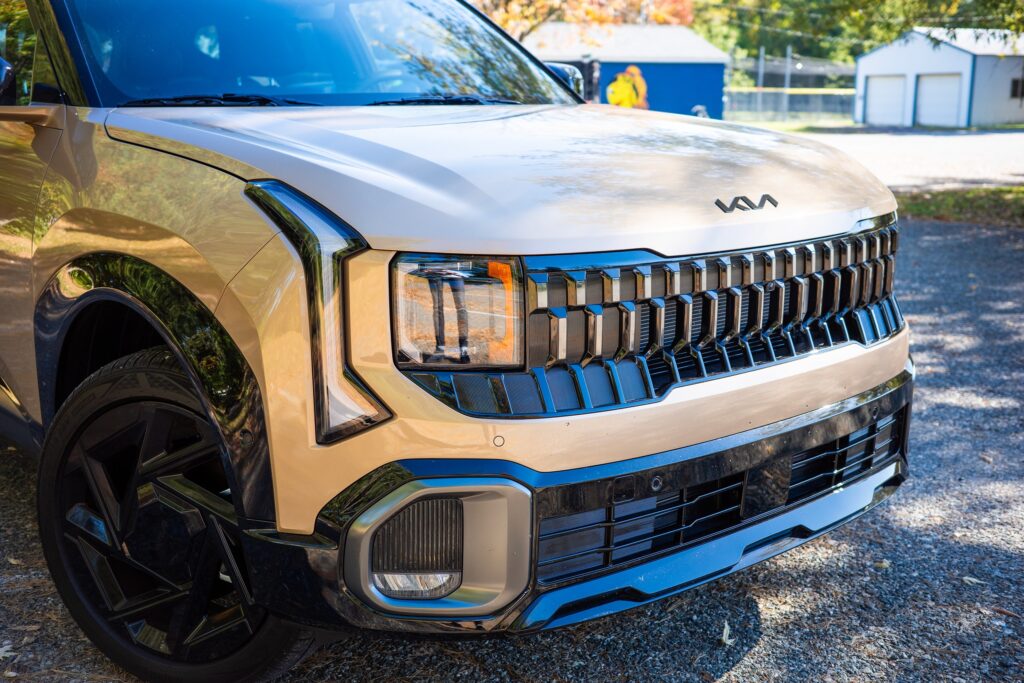
Car design is really just fashion, and fashion doesn’t follow logic. Ask most car designers—particularly those that have penned vehicles that scores of people hate—and they’ll tell you that making a car that most people agree looks good on first impression only fast-tracks the road to irrelevance. So we get cars like the new Kia Seltos I was just driving last week: Rigid, blocky, techy, and busy, because surprise is better than approval. After the surprise fades, though, what are you left with?
I will admit, I was a fan of the Kia K4 when that compact sedan was first revealed. The brand’s then-new design language, melding muscle with an ’80s sensibility toward diagonal lines in a cyberpunk-ish way, felt like a serious step forward for Kia, which never really had a design identity before. The problem with creating something that distinctly modern, though, is what happens when the moment passes and fashion moves on. How does it age? And I don’t think Kia’s language is working anymore, at least not for me.
This might sound a little strange, but I thought the old Seltos was a good-looking car. I liked the subtly flared fenders and curved but still purposeful-looking fascia; it reminded me of a baby Dakar runner. The new one, though, may as well be another internet-connected brick. There’s nothing analog or soulful about it; it’s aesthetically as fleeting and disposable as a cheap Android tablet.
Adam Ismail
Inside, the fit and finish is acceptable even if the plastics are tacky and bland; what can you do, it’s the most affordable model they sell. There are enough physical buttons, too. But there’s this constant motif of edginess, of trying hard, that to some degree works against practicality.
Take that weird climate panel between the instrument cluster and infotainment screen. Yes, I also liked the look of this, the very first time I saw it in the K4. But, because of its placement in a permanent blind spot behind the steering wheel’s right edge, you have to look around the wheel to interact with it. It’s frivolous, the furthest thing from intuitive, and it doesn’t feel fully baked.
Adam Ismail
This is just my opinion, of course, and the general public probably doesn’t share it, based on how well the Seltos is selling this year—its first post-redesign—compared to last. Seltos sales in 2026 are up 45% through September. Maybe Kia’s rebrand is continuing to pay dividends. Maybe the stuff I find annoying or over-the-top is appreciated on such a cheap vehicle, a category that typically doesn’t have much enthusiasm behind it. It should also be said that the Seltos is broadly a fine car with pleasant road manners—though the $37,250 sticker on my SX all-wheel-drive tester is more than anyone should pay for it.
Those are all just theories, but ultimately I’m just surprised how quickly I’ve soured on what Kia’s been going for in recent years. Hyundai, too, is getting a little out there, surveying the new Tucson as well as the Avante that is set to form the basis for our Elantra. I suppose at least Genesis can do no wrong, but then, they’re also the aspirational brand. Maybe they’ve decided timeless design is a privilege that costs extra.
Got a news tip? Reach out to tips@thedrive.com
The post Kia’s Design Isn’t Working for Me Anymore, But It’s Sure Working for America appeared first on The Drive.
Source: www.thedrive.com — article syndicated from the publisher’s feed; all rights remain with the original publisher.