
COMMENTARY: Why dealership vehicle acquisition specialists must harness data and analytics over gut instincts
Subscribe today to get the latest news and trends shaping the pre-owned market.
By subscribing, you agree to receive communications from Auto Remarketing and our partners in accordance with our Privacy Policy. We may share your information with select partners and sponsors who may contact you about their products and services. You may unsubscribe at any time.
Winning organizations separate the people who judge talent by feel from the people who measure it, then give the measurers real authority. Dealerships now face a similar moment. Sourcing vehicles has become a high volume, data-intensive discipline, yet most stores still staff it like a side task for the sales floor.
A market that punishes guesswork
The used vehicle market leaves little room for instinct, as inventory reached 2.21 million units in September, and days supply climbed to 49 as the sales pace cooled. The average listing price hit $27,235, the highest monthly figure since December 2022. Mix matters as much as volume. Vehicles priced under $15,000 turn faster at 34 days supply, but that segment has shrunk from 19.4% to 15.7% of inventory.
Those numbers carry a practical message, as dealers understand if you buy too many of the wrong units carrying costs pile up. Buy too few of the right ones and customers leave for a competitor. Every acquisition decision is a bet, and the quality of the bet depends on the quality of the information behind it.
The lesson dealers already learned with F&I
Dealerships once sold cars and that was it. When F&I products arrived as add-ons, smart stores did not ask salespeople to squeeze them in between test drives. They built a dedicated F&I department with specialized people, defined procedures and compliance discipline.
High volume acquisition is the next version of that story, because it calls for a new function, which some operators call a buy center, staffed and managed apart from traditional sales. Salespeople excel at relationships, negotiation and reading a customer in the moment. A buy center requires a different skill set: pricing models, market velocity, sourcing mix and consistent execution. Asking a top salesperson to run it is like asking a great closer to work as an actuary. The talent is real, but it is aimed at the wrong job, and the arrangement tends to fail.
Data over emotion
However, today’s sophisticated buy center exists to replace emotion with evidence. The central questions are measurable: How many vehicles should the store acquire this month? From which channels? At what price? How many qualified buyers can realistically absorb that volume?
Subscribe to Auto Remarketing to stay informed and stay ahead.
By subscribing, you agree to receive communications from Auto Remarketing and our partners in accordance with our Privacy Policy. We may share your information with select partners and sponsors who may contact you about their products and services. You may unsubscribe at any time.
Emotion pushes the other way, such as a gut feeling saying a certain truck will sell, or that a strong month justifies a bigger buy. Analytical staff test those instincts against sales history, local demand and the cost of holding each unit. That is the same shift sports franchises made when they hired analysts to sit alongside scouts.
Why AI raises the stakes
Artificial intelligence now strengthens the case for this type of data-harnessed specialization. AI is only as good as the data and processes underneath it. A general purpose chatbot can produce a confident answer about acquisition volume, but it knows nothing about a particular store’s margins, turn rates or local market unless someone feeds it clean, consistent information.
Without a disciplined playbook, AI simply scales whatever habits already exist, including bad ones. A dealer who asks a chatbot a vague question and acts on a vague answer has swapped one guess for another. A trained analytical team can structure the data, ask better questions and recognize when an output does not hold up.
Process is a form of risk control
Volume also changes the tolerance for inconsistency. At 20 vehicles a month, extra effort can cover for an uneven process. At 100 or more a month, across in person and remote purchases, it cannot. Every vehicle needs the same checks regardless of who handles the deal: driver’s license verification, VIN review, title and payoff confirmation, and fraud screening.
The cost of skipping steps is substantial, and one industry analysis found that 48% of dealerships lost four or more vehicles to identity fraud over two years, and a single fraudulent transaction can cost $10,000 to $20,000. Fraud tends to surface late, after staff time and deal structuring are already invested. Standardized verification at the start of every transaction protects margin and creates an audit trail.
Building the function
Dealers considering a buy center can begin with a few foundational moves. Assign clear ownership of acquisition decisions to someone outside the sales chain of command. Recruit for analytical ability and comfort with data rather than showroom experience. Document a single playbook for sourcing, pricing and verification, and require it on every deal. Finally, measure results by acquisition cost, days to sale and gross profit per unit, so adjustments rely on evidence.
Technology can support each of these steps, but it works best when a defined team and a defined process stand behind it.
The takeaway
Dealerships built F&I departments because specialized products demanded specialized people. Data driven acquisition presents the same choice. Stores that give it a dedicated owner, a repeatable playbook and trustworthy data will make better buying decisions at higher volume. Stores that leave it to instinct and a chatbot will keep placing expensive bets without knowing the odds.
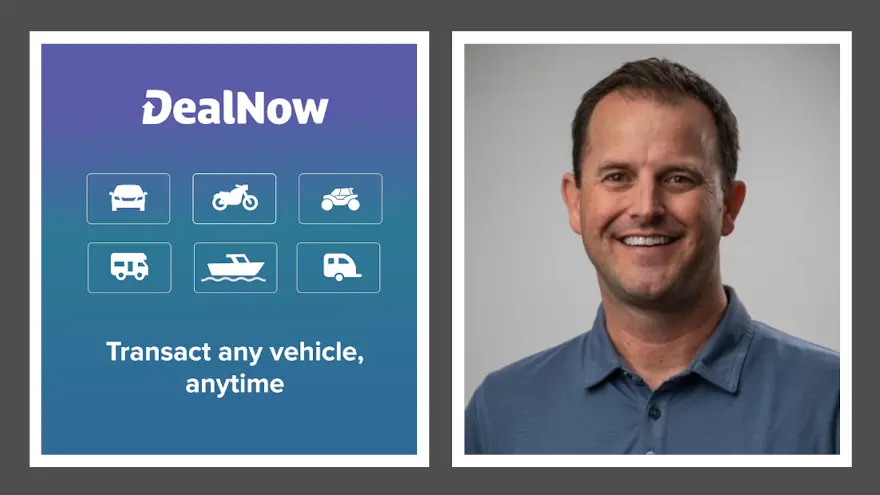
Brad Parker is the co-founder and CEO of DealNow.com, a platform transforming how cars are bought and sold between private parties and dealers. DealNow looks to make every transaction fast, secure, and effortless. Visit www.dealnow.com.
Subscribe to receive our daily e-newsletter and never miss the latest industry news, trends, and insights across the used-car and remarketing space.