
Top Injection Mold Manufacturer: Taizhou Lingyue Mold and Plastic Co., Ltd.

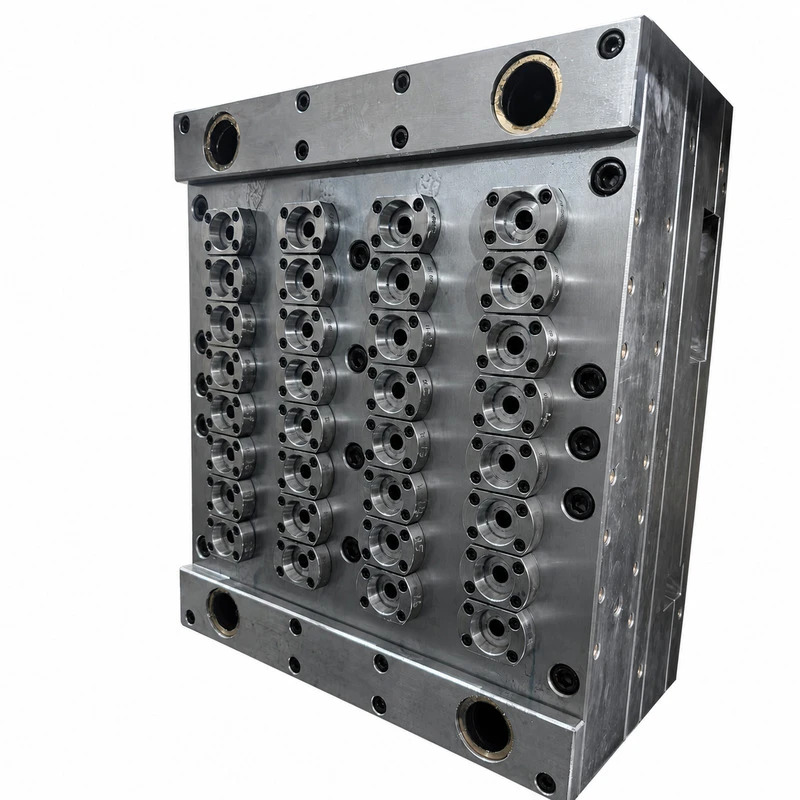
Test Tube Mold
TAIZHOU, ZHEJIANG, CHINA, November 4, 2026 /EINPresswire.com/ —
The demand for reliable injection molds continues to grow as manufacturers seek greater production efficiency, consistent product quality, and flexible solutions for increasingly complex designs. Taizhou Lingyue Mold and Plastic Co., Ltd. operates in the mold manufacturing sector, providing mold-related solutions for a range of industrial and consumer applications. As companies evaluate options when sourcing from a Top Injection Mold manufacturer, factors such as engineering capability, mold durability, dimensional accuracy, and technical communication remain essential to making informed purchasing decisions.
Injection Molding and Its Role in Modern Manufacturing
Injection molding is widely used to manufacture plastic components in large quantities. The process involves heating a suitable plastic material until it reaches a molten state, injecting it into a mold cavity under controlled pressure, and allowing it to cool and solidify before the finished part is removed. When the mold is designed and maintained properly, the process can deliver repeatable dimensions, consistent surface finishes, and efficient production cycles.
This manufacturing method serves many industries, including automotive production, household appliances, consumer goods, electronics, packaging, and industrial equipment. Plastic components may range from simple containers and household products to complex structural parts that require detailed geometries and carefully controlled tolerances.
The mold itself plays a decisive role in determining the quality and repeatability of the finished product. Its cavity geometry, cooling channels, gating arrangement, material selection, and ejection system all influence production performance. A poorly designed mold can lead to defects, extended cycle times, excessive material waste, and costly maintenance. A well-engineered mold, by contrast, can help manufacturers maintain stable production and reduce avoidable downtime.
For this reason, selecting a mold supplier involves more than comparing initial quotations. Buyers must consider the supplier’s design experience, manufacturing processes, ability to understand product requirements, and support throughout the mold development cycle.
Taizhou Lingyue Mold and Plastic Co., Ltd. in the Mold Manufacturing Sector
Taizhou Lingyue Mold and Plastic Co., Ltd. is associated with the mold manufacturing industry in Taizhou, Zhejiang Province, China, a region known for its concentration of mold-making businesses. The company’s publicly available information describes experience in injection molds and fiberglass-reinforced plastic molding molds, including SMC and BMC applications.
Its broader mold-related product coverage includes applications such as electrical meter boxes, protective helmets, insulation components, appliance parts, and everyday plastic products. This range reflects the diversity of applications served by mold manufacturers, where each project requires a mold structure suited to the geometry, material, operating environment, and production volume of the final component.
For customers looking for an Injection Mold manufacturer, the company’s industry focus provides a starting point for evaluating whether its capabilities align with a particular project. Detailed discussions about the required mold type, component drawings, resin selection, target production volume, and quality standards can help determine the suitability of a proposed solution.
The company also lists Compression Mold among the product categories relevant to this discussion. Although injection molding and compression molding use different processing methods, both depend on careful mold design, appropriate tooling materials, and reliable manufacturing practices. Buyers should identify the required process at the beginning of a project to ensure that the tooling concept matches the intended production method.
Understanding Compression Mold Applications
Compression Mold is an important tooling category used in compression molding, a process in which a measured quantity of molding material is placed into a heated mold cavity. The mold closes, and heat and pressure help the material flow into the required shape and cure or solidify. The component is then removed after the necessary processing cycle.
Compression molding is commonly associated with thermosetting materials and certain composite materials. Depending on the material formulation and application, the process can be used to manufacture electrical insulation components, automotive parts, industrial covers, structural components, and other molded products.
Unlike conventional plastic injection molding, compression molding does not generally rely on injecting molten material through a runner system into a closed cavity. Instead, material is positioned in or near the cavity before compression. This difference affects mold construction, material flow, heating requirements, venting, and the overall production cycle.
A compression mold must be designed around the properties of the material and the geometry of the finished component. Important considerations include cavity dimensions, mold temperature, pressure distribution, material flow, curing time, and the ease of part removal. For composite molding, the design may also need to account for reinforcement distribution and the characteristics of the molding compound.
When assessing Compression Mold solutions from Taizhou Lingyue Mold and Plastic Co., Ltd., prospective buyers should provide detailed information about the intended material, component structure, required tolerances, expected output, and operating conditions. These details help establish the appropriate tooling approach and provide a clearer basis for evaluating technical proposals.
Engineering Considerations for Quality and Precision
Successful mold manufacturing begins with a clear understanding of the final product. Drawings, three-dimensional models, material specifications, and production targets provide the foundation for mold design. Before machining begins, design reviews can help identify potential problems involving wall thickness, draft angles, undercuts, parting lines, and ejection arrangements.
Computer-aided design and manufacturing tools are commonly used throughout the mold development process. Depending on the project, mold-flow analysis and other engineering simulations may help identify potential filling problems, uneven cooling, warpage, or areas that require design adjustments. The usefulness of these tools depends on the complexity of the part, the accuracy of the input data, and the engineering review that follows.
Material selection is another important consideration. Mold steel and other tooling materials must be appropriate for the production volume, molding material, operating temperature, and expected wear. Surface treatment, polishing, and other finishing operations may also affect release performance, appearance, and resistance to wear.
Manufacturing accuracy alone does not guarantee that a mold will perform as intended. Assembly, alignment, cooling performance, and ejection behavior must also be evaluated. Trial molding provides an opportunity to inspect initial samples, compare dimensions against the approved specifications, and identify adjustments before routine production begins.
For buyers working with Taizhou Lingyue Mold and Plastic Co., Ltd., establishing clear acceptance criteria at the quotation and design stages can make this process more efficient. The parties should agree on inspection methods, sample approval procedures, modification responsibilities, and the documentation required before final acceptance.
Supporting Efficient Production and Long-Term Value
A mold is a long-term production asset, and its value should be assessed over its expected service life rather than by purchase price alone. Maintenance requirements, spare-part availability, ease of cleaning, and the accessibility of wear-prone components can influence the total cost of ownership.
For high-volume production, small differences in cycle time and rejection rates can have a meaningful cumulative effect. Consistent cooling, effective ejection, and stable material processing help reduce production interruptions. Regular inspection and preventive maintenance can also identify wear or damage before it causes more serious problems.
Mold design should reflect the customer’s actual manufacturing environment. A project intended for continuous mass production may require different tooling priorities from one involving short runs or frequent product changes. Similarly, parts with demanding cosmetic requirements may need a different surface finish and process-control strategy from components used in concealed or non-cosmetic applications.
These considerations apply to both injection molds and compression molds, although the specific engineering solutions differ according to the process and material. Buyers should communicate their production targets and expected operating conditions clearly so that the tooling design can balance performance, durability, and cost.
Supplier Communication and Project Coordination
Mold projects typically involve multiple stages, including requirement review, design confirmation, machining, assembly, trial production, sample evaluation, and final delivery. Coordination among the customer, mold designer, production team, and quality personnel is important throughout this sequence.
Clear communication can help prevent costly revisions. Changes to a component’s dimensions, material, or appearance after mold design approval may affect the cavity structure and manufacturing schedule. Establishing a formal process for reviewing and approving changes helps both parties manage project expectations.
Delivery planning should also account for the scope of the tooling project, required testing, sample approval, and any modifications identified during trials. Buyers should request a realistic schedule and clarify which milestones depend on customer feedback or the availability of production materials.
After delivery, technical documentation and guidance on operation and maintenance can support more consistent use of the mold. The exact scope of these services should be confirmed with the supplier before an order is finalized.
For international buyers, communication should additionally cover shipping arrangements, packaging, export documentation, payment terms, and responsibility for transportation-related costs. Confirming these details early can reduce uncertainty and help projects move from design to production more smoothly.
Conclusion
Injection molds and compression molds support a wide range of manufacturing activities, from everyday plastic products to specialized industrial components. Their performance depends on the relationship between product design, tooling structure, material properties, manufacturing precision, and process control.
Taizhou Lingyue Mold and Plastic Co., Ltd. operates in this broader tooling sector, with publicly described capabilities covering injection molds and SMC/BMC composite molding molds. Its product-related scope includes Compression Mold, a category relevant to buyers evaluating tooling for suitable thermosetting and composite applications.
For manufacturers seeking a mold supplier, the most effective approach is to evaluate technical capability against clearly defined project requirements. Reviewing drawings, material specifications, production volumes, quality expectations, and maintenance needs can help buyers compare suppliers on a consistent basis. Confirming the specific process, mold design, acceptance criteria, and delivery arrangements directly with the manufacturer is an important final step before committing to a project.
Company Profile: Taizhou Lingyue Mold and Plastic Co., Ltd.
Taizhou Lingyue Mold and Plastic Co., Ltd. is a mold manufacturing company based in Taizhou, Zhejiang Province, China. Its publicly available company information describes production of injection molds and SMC/BMC fiberglass-reinforced plastic molding molds. The company’s application areas include electrical meter boxes, protective helmets, insulation components, appliance-related products, and other molded products.
Its mold-related offerings include Injection Mold and Compression Mold applications. Customers considering a project should contact the company directly to confirm its current product scope, engineering capabilities, material compatibility, quality requirements, and delivery arrangements.
For further information about the company and its products, visit www.lingyuemold.com.
Address: NO.18, Shangxian Road, North Industrial Zone, Huangyan, Taizhou City, Zhejiang, China
Official Website: https://www.lingyuemold.com/
XingCun Chen
Taizhou Lingyue Mold and Plastic Co., Ltd.
ly@lingyuemold.com
Legal Disclaimer:
EIN Presswire provides this news content “as is” without warranty of any kind. We do not accept any responsibility or liability
for the accuracy, content, images, videos, licenses, completeness, legality, or reliability of the information contained in this
article. If you have any complaints or copyright issues related to this article, kindly contact the author above.