
2027 Chevrolet Silverado First Drive Review: A Huge ‘W’ for V8s
In America’s car market, trucks lead the way—whether that’s in sales, profit margins, or, in many cases, innovation. By that measure alone, the 2027 Chevy Silverado is one of the most important introductions of the year. This isn’t a complete, frame-up redesign, but rather a heavy mid-cycle update featuring new engines, a redesigned interior, and a few new clever features.
Corvette got to take the first lap with GM’s new lineup of V8 engines, but now it’s time to bring those motors mainstream—alongside an updated turbo-four and Duramax 3.0-liter diesel, all of which ship with the 10-speed automatic this year. And with the exception of the four-cylinder, we got the chance to sample each of them in their natural environments. Let’s dig in.
The Baby Duramax
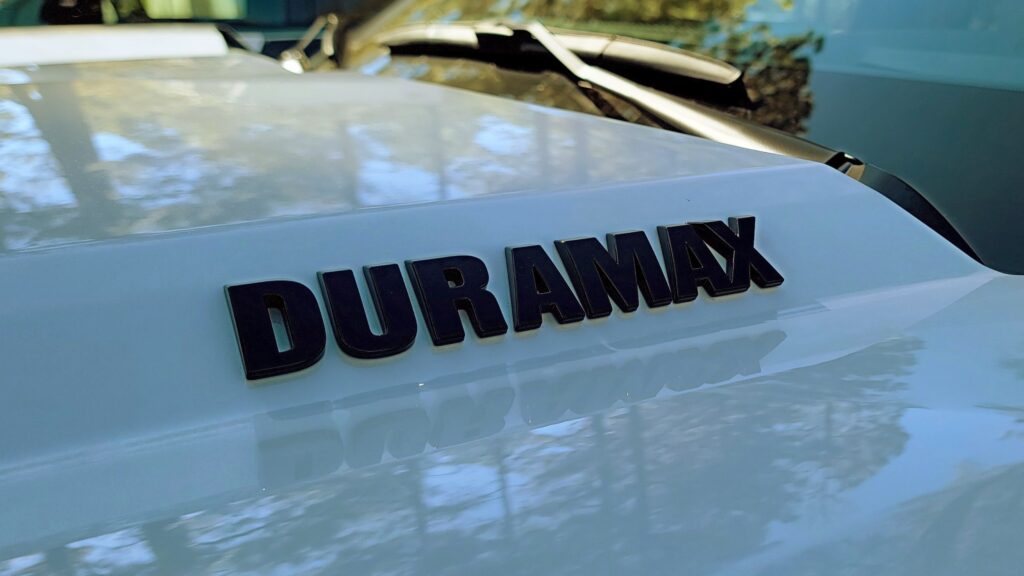
Of the engines offered in the updated Silverado, this is the one that rolls into 2027 with the fewest changes. Its power and torque outputs are identical to the outgoing Duramax’s at 305 horsepower and 495 pound-feet of torque. The key differentiator this year is the Silverado’s new extended-range fuel tank. With 34 gallons of diesel, you can clear 900 miles on a fill-up, which will help take the sting off a bit when you do; at today’s prices, that’ll run you an average of $213.
But get behind the wheel of the new Duramax-powered Silverado, and that concern will quickly fade into the background. The little diesel has a charmingly un-diesel-like personality in the half-ton. It’s quick, quiet and authoritative. Expensive? Maybe. But if you’re towing on the regular (and Chevy says its customers do, in overwhelming numbers), then this is still the engine to get. There’s not much new to say here. If it ain’t broke, don’t fix it, right?
Byron Hurd
The 5.7L
If you see a 2027 Silverado on the road, chances are it’s a 5.7-liter, and not because it’s the cheapest; that honor goes to the four-cylinder. It is the less-expensive of the Silverado’s two V8 models, however, and that makes it a popular target for budget-conscious buyers who don’t want to give up an eight-cylinder configuration. The 5.7-liter is aimed right at the meat of the truck market. It makes 402 hp and 428 lb-ft of torque (Ford’s 5.0L Coyote makes 400 hp and 410 lb-ft; Ram’s 5.7L Hemi makes 395 hp and 410 lb-ft.).
This is the very definition of a workhorse model. It may not offer the most impressive performance numbers on paper, but it does offer the most all-around capability. With a 13,700-pound max tow rating, it has a 200-pound edge on the Ford F-150 and an even bigger advantage over the Ram.
Simply put, the 5.7-liter has two jobs. The first is to simply be a V8, and after a thorough investigation (lifting the hood and looking), that part checks out. It looks, sounds, and feels the part. Its second job is to be relatively economical to own and operate. The 5.7-liter can be had on any Silverado, which satisfies half of that requirement—for whatever that is worth in today’s economy. Ram CEO Tim Kuniskis warned us last year that the era of the $40,000 full-size pickup is over; feel free to extrapolate from there. The second half of that equation depends heavily on gas prices and (still forthcoming) EPA fuel economy figures. I personally don’t expect them to change relative to 2026’s.
Fulfilling those duties so admirably makes the 5.7 seem like kind of a chameleon. It’s not the star of the build, just a strong, dependable supporting actor. It fades into the background because it’s supposed to, but you miss it when it’s not there. Driving it backs this up; it does the job so well that you don’t even notice it’s doing it.
This is the ultimate “no notes” engine. The 350 rides again.
Byron Hurd
The 6.6L
That brings us to the big boy. At 6.6 liters, the “L78” small block is the king of GM’s gas V8s. If you’ve been following the rollout of the current-gen small block, you’ve probably noticed that it’s down ever so slightly on displacement from the Corvette, which gets 6.7 liters to play with. It’s an almost trivial distinction, but it gives the Corvette a nice feather in its cap. It also reflects the fact that not all V8s are created equal. The L78 was engineered specifically for truck duty, with a slightly shorter stroke (and correspondingly lower piston speeds) making it better suited to steady-state loads (think towing and hauling) rather than zipping around a race track.
The beautiful thing about the 6.6-liter small block is that you get more power without much real penalty. Despite the larger displacement, the engine isn’t physically any larger than the 5.7—same block, bigger holes, as GM engineers like to say. Any added weight comes from beefing up the driveline and chassis to handle the additional power.
How much power, exactly? 481 horses and 501 lb-ft of torque. For the moment, that’s enough for GM to claim best-in-class power and torque for light-duty pickups. Ram’s forthcoming 6.4-liter light-duty V8 is good for 470 horses and 455 pound-feet of torque, meaning GM just out-muscled the Big Horn brand’s 392-powered Rumble Bee muscle truck.
Byron Hurd
The Enthusiast Spec
GM simplified its lineup somewhat for 2027, making it ever-so-slightly easier to configure a truck to your liking. But in broad strokes, the general lineup remains roughly the same. That means that if you want the 6.6-liter V8, you’re looking at a mid-trim truck or higher. And if you want to have fun in it, you really want a ZR2.
Yes, this is an off-road trim, and yes, you can get the 6.6-liter in far more civilized guises. You can also drink milk at parties. That doesn’t mean you have to.
The ZR2 formula carries over pretty much identically from the 2026. You get the lift, a set of Multimatic DSSV shocks, plenty of underbody skid protection—and no running boards. Take it from your 5-foot-7-inch author: If you’re short, your odds of looking cool while entering or exiting this thing are vanishingly small.
Byron Hurd
The good news is, once you’re inside, you don’t have many reasons to leave. The ZR2 can go pretty much anywhere. The secret sauce here, as with most modern off-road models, is the camera setup. The landscape that would normally disappear behind that enormous hood is easily viewed on the center screen. The only thing holding the ZR2 back is its sheer size. If you’re concerned about pinstriping, you may want to park at the trailhead and hoof it.
If you fancy things a bit faster and less technical, the ZR2’s new Baja mode will encourage yo
Source: www.thedrive.com — article syndicated from the publisher’s feed; all rights remain with the original publisher.