
Coach K Urges Aftermarket Leaders to Build Trust, Share Ownership
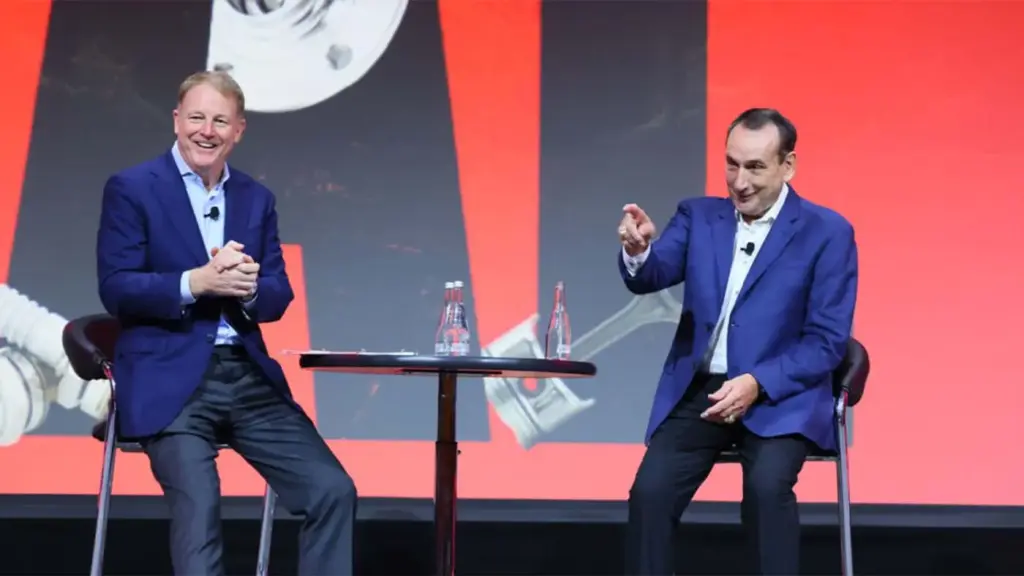

Automotive aftermarket leaders can build stronger teams by adapting how they communicate, holding their best people accountable and giving employees ownership of the work, Mike Krzyzewski told AAPEX attendees.
The former Duke basketball coach, known as Coach K, drew on his experiences at West Point and with U.S. Olympic teams to explain how preparation and trust help talented people succeed together. His message for an industry built on relationships centered on what leaders do every day to make those relationships stronger.
“It’s on you as the leader to get your message across,” Krzyzewski said.
That responsibility requires leaders to keep learning. Throughout his career, he said, he viewed himself as becoming something better, with improvement always ahead of him. He encouraged attendees to approach their time at the show the same way: renew relationships, learn something new and return to their businesses better prepared.
Prepare to Win and Adjust the Plan
Krzyzewski traced several leadership principles to West Point, including responding to setbacks by looking for solutions and building relationships in which people tell one another the truth immediately. He described that foundation as the speed to trust. When people can believe what their teammates say, they can move forward together with confidence.
Preparation was another lesson, reinforced by his college coach, Bob Knight. Everyone wants to win, Krzyzewski said. The difference is how much work people will do to prepare themselves for it. His goal was to make his teams worthy of winning.
That preparation still left room for adjustments. He wrote practice plans the night before, then changed them when he or his assistants saw something that needed attention. Agility, adaptability and accountability formed his leadership framework. Agility meant reading the situation and responding. A plan gave the team direction, while observations during the work helped determine what should happen next.
Make Communication a Shared Responsibility
As Krzyzewski grew older, the college players he coached remained the same age. Reaching them required changes in his examples, language and meeting structure. Meetings that once lasted 20 minutes eventually needed to take eight, he said. Pictures helped. So did giving assistants and players opportunities to speak.
“Leadership is not one voice. It should be the team’s voice,” Krzyzewski said.
Sometimes he sat in the back while an assistant led a meeting, adding a point when appropriate. Players also addressed their teammates, using language and examples that helped him understand how they thought.
For aftermarket managers introducing a new process or asking employees to change, that approach puts a responsibility on the person leading the discussion: understand how the team receives information and invite its members into the conversation.
Krzyzewski encouraged leaders to ask people what they think about the work and how they feel about it. Those questions give employees a greater sense of importance and provide leaders with insight. A team becomes stronger when people feel comfortable offering that feedback without waiting to be asked.
Hold the Best People Accountable
Accountability, Krzyzewski said, means telling the truth. That includes recognizing good work and useful ideas alongside addressing problems. Doing both takes time and attention.
One of his toughest examples involved Kobe Bryant before the 2008 Beijing Olympics. During an exhibition game against Australia, Bryant began taking shots that fell outside the team’s expectations. Other players noticed, leaving Krzyzewski responsible for addressing it.
He and his staff assembled video of the shots. The next morning, he showed Bryant the footage and explained how those decisions could undermine the team. Bryant accepted the correction.
Weeks later, during the gold medal game against Spain, Bryant helped rally his teammates during a timeout. Players spoke up, took ownership of the moment and made the plays needed to win.
For Krzyzewski, that was evidence of a winning attitude developed through the team’s daily work. Leaders cannot anticipate every decision their people will need to make. They can establish the expectations and trust that help people make those decisions together.
Give People Room to Contribute
Krzyzewski said he became more committed to empowerment as his career progressed. He asked players for input on practice plans and defensive decisions, giving them ownership of how the team would execute.
He also wanted assistants to think like head coaches, developing their judgment while improving his own.
“You can’t teach them everything, but you can create an environment where they feel comfortable in using their talents,” he said.
The same principle applied to values. Teams needed shared standards that members upheld together, including honesty, respect and responsibility for one another.
“My values stayed the same. How I communicated them changed,” Krzyzewski said.
For leaders working through change, that distinction provides a practical starting point: keep the standards clear, listen to the team and give people the confidence to act on them.