
How Bandag Retreads Truck Tires
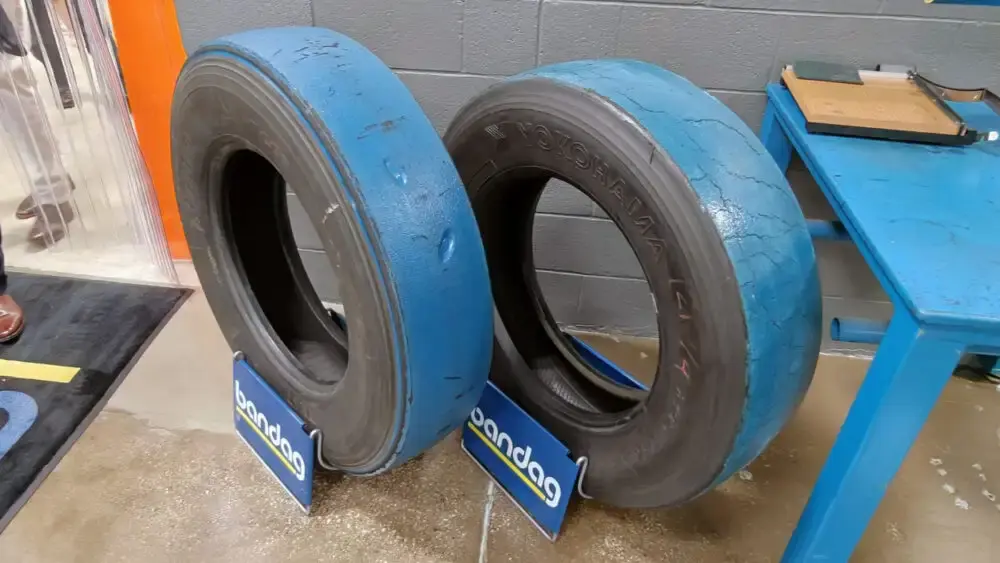
It’s a 10-step, 5-6 hour process to retread a tire. We’ll break it down in a little less time than that.
The retreading process gives a truck tire another tread life by reusing its casing. Getting there involves a series of inspections, surface preparation, repairs, and manufacturing steps before that tire returns to the fleet.
Tire Review toured Bridgestone’s new Bandag Training Center in Akron, Ohio, to see that work up close. Tom Trego, director of franchise support for Bridgestone Bandag Tire Solutions, walked us through the equipment and explained what happens at each station.
Bandag teaches a 10-step process. I’ve grouped those steps into six broader stages to follow a casing from its arrival through the final inspection.
1. Initial Inspection and Shearography

The first question is whether the casing qualifies for retreading. Technicians evaluate its condition against acceptance criteria, including requirements established by the fleet. Trego said those can include casing brands and age limits.
The inspection involves several checks. A spreader opens the tire for examination, equipment tests for nail holes, and shearography helps identify internal conditions technicians cannot see with the naked eye. Injuries requiring repair are marked so they can be addressed later in the process.
For fleet managers, this is worth discussing with the dealer. Knowing why a casing qualifies, or why it doesn’t, helps explain what happens to the tires sent out for retreading.
2. Buffing and Surface Preparation

Once the casing passes inspection, the buffing machine removes the old tread and prepares the remaining surface to specifications. That prepared surface will receive the bonding rubber and replacement tread.
Mike Hazelrigg, training manager for Bridgestone Bandag Tire Solutions, explained that automated buffing procedures requires human review and approval, once the machine finishes. The casing still has additional preparation ahead before it reaches the builder.
3. Skiving and Repair

With the old tread removed, technicians can examine damaged areas more closely. Skiving involves grinding into those areas to assess the injury and remove affected material.
Trego pointed to superficial damage found in gravel and waste applications as examples. He also described opening an area where rust appears on a belt after buffing. The work exposes the condition so technicians can evaluate and prepare it before applying new material.
At the repair station, technicians address injuries marked during inspection. They prepare the repair surface and select patches suited to different injury types and sizes. A nail hole identified at the beginning of the process, for example, receives attention here before the casing moves on.
4. Building the Retread

The first material applied is uncured bonding rubber, which an extruder places on the prepared casing. The replacement tread is already pre-cured. The rubber between the tread and casing will cure to form the bond.
The casing then moves to a builder, where the operator loads the tread design selected for the customer. As the tire rotates, the machine applies the tread, controls its tension, and cuts it to length.
The operator checks and joins the splice where the two ends meet. Rollers then press the tread against the casing through a process called stitching, removing trapped air and bringing the assembly together.
At this point, the tire has its replacement tread in place. Completing the bond requires the next stage.
5. Curing the Assembly

Before entering the chamber, the tire receives a flexible rubber envelope and sealing components. These allow the assembly to remain under controlled pressure while heat and time complete the cure.
The envelope stays around the tire throughout that cycle. Afterward, technicians remove it along with the sealing components, leaving the replacement tread bonded to the casing.

The Akron chamber holds 22 tires per cycle, Trego said. It automatically tracks temperature and pressure and provides alarms for problems during the cycle. Trego also noted that loading another batch into a chamber that is already warm can shorten the warmup period.
Trego estimated five to six hours for the overall retreading process. Curing accounts much of the production time, with the rest of the stations around 45 minutes, total. He added that getting a tire from a fleet, retreading it, and sending it back, takes about a week.
6. Final Inspection
Once the envelope and sealing components are removed, technicians examine the finished retread. They check that it carries the customer’s specified tread and that the cure appears correct.
The tires generally receive a fresh coat of paint before returning to customers. This is the last quality check after the work performed throughout the plant, from preparing the casing to applying and curing the tread.

The Return From Reusing the Casing
Each of these steps works toward putting an existing casing back into service with replacement tread. For fleets, that reuse carries financial and environmental benefits.
At the ribbon cutting, Bridgestone said the retreading industry saves fleets more than $3 billion annually. The company also cited more than 217 million gallons of oil saved each year through retreading.
For Bandag specifically, Bridgestone reports more than 300 million tires diverted from landfills over the brand’s history. The company attributes that cumulative total to extending tire service life through retreading.