
Tesla deemed liable for fraud after Solar Roof ‘experiment’ on a home
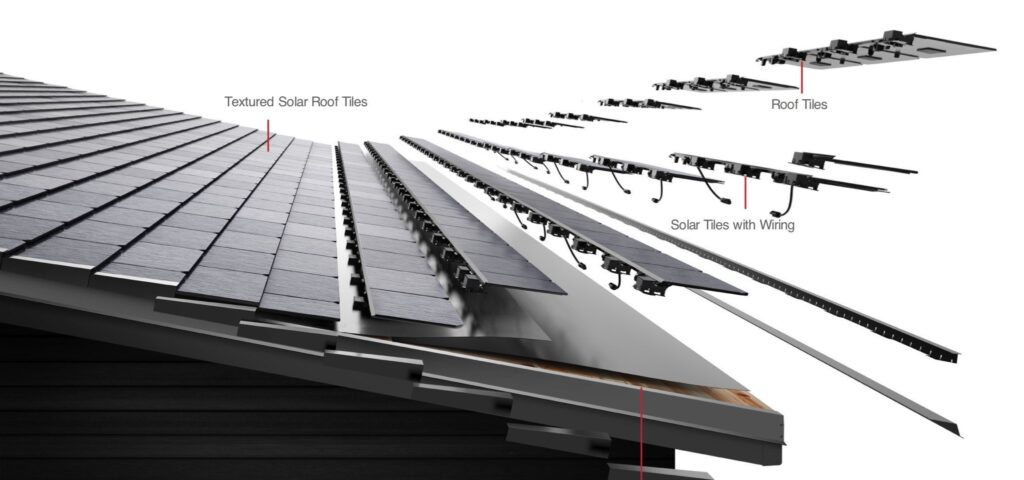
A California judge has deemed Tesla liable for fraud in a Solar Roof lawsuit, after the company repeatedly failed to hand over evidence. Tesla had already admitted it breached the contract, broke its warranty, and was negligent on the job.
The homeowner says fixing the damage will cost “well over $2.5 million.” Tesla once offered him $5,000.
The case is Conroy v. Tesla, filed in 2022 in San Diego Superior Court’s North County division (case No. 37-2022-00043670). Electrek reviewed the court orders, the complaint, and the parties’ joint trial readiness report. Here’s what’s in them.
Tesla has already admitted liability
Ambrose Conroy, who lives in Rancho Santa Fe, signed up for a Tesla Solar Roof in March 2020. The original contract was $82,210 for a 13.1 kW system. By February 2021, after two amendments, it had grown to roughly $110,000 for an 18.2 kW roof and six Powerwalls.
Advertisement – scroll for more content
The roof was never finished. It never passed a county inspection, and it never produced a single kWh for the house.
Tesla isn’t contesting most of that anymore. In the joint report filed by both sides last month, Tesla stipulated to liability on three of the five claims.
Joint Trial Readiness Conference Report, Oct. 20, 2026 (highlight by Electrek)
The other two claims, fraud and negligent misrepresentation, are where things went badly for Tesla.
Two sanctions, then the big one
Judge Cynthia Freeland sanctioned Tesla twice over discovery before going further. She ordered it to pay $15,467.50 in February and another $13,500 in June, both times for failing to produce a proper privilege log and responsive documents, and both times warning that issue sanctions could follow.
Tesla missed the next deadline anyway. So on September 11, the court deemed Tesla liable for fraud and negligent misrepresentation, limiting the trial on those claims to compensatory and punitive damages.
San Diego Superior Court minute order, Sept. 11, 2026 (highlight by Electrek)
The judge found “ample evidence to support that Defendants have acted willfully.” Among the missing records were Microsoft Teams messages (Tesla’s own corporate witness testified they’re kept “for infinity”), OSHA logs, emails with San Diego County inspectors, and more than 20 quality, install, and safety reports from Tesla’s internal Bolt system.
She also wrote this:
San Diego Superior Court minute order, Sept. 11, 2026 (highlight by Electrek)
Tesla asked her to reconsider, arguing it had since produced everything. She said no in a ruling dated October 27, writing that the late documents could support Conroy’s theory that Tesla “knowingly used Plaintiff’s home as an experiment while knowing they lacked the experience to perform as promised.”
Ruling on Tesla’s motion for reconsideration, Oct. 27, 2026 (highlight by Electrek)
“Experimenting” on the house, and daily reports to Elon Musk
And the “experiment” word shows up in Tesla’s own messages, according to the trial exhibit list. Exhibit 224 is described as text messages from January 13, 2021, between Tesla’s director of model engineering Bobby Yang and other Tesla employees.
Exhibit 224, joint exhibit list, Conroy v. Tesla (highlight by Electrek)
To be clear, that’s how Conroy’s side describes the messages on the exhibit list. We haven’t seen the texts themselves. But Elon Musk is on Conroy’s witness list, and internal emails quoted in the complaint point the same way.
On February 9, 2021, Yang wrote internally that the house was in the “99.5 percentile in terms of complexity” and that “if we can do this job well, we should be able to do any job well.” RJ Johnson, then head of Tesla’s energy business, replied that the project would “skew numbers” but that Tesla needed “to make it right.”
First Amended Complaint, Conroy v. Tesla (highlight by Electrek)
Then he added one more line.
First Amended Complaint, Conroy v. Tesla (highlight by Electrek)
Johnson was fired in April 2021. The roof had at least 59 mounting planes, and one employee called it the largest job Tesla had attempted at the time, according to the complaint.
A two-week job that never ended
Conroy’s account of the installation reads like a list of everything that can go wrong on a roof. These are his allegations, but Tesla has now conceded breach and negligence.
The tear-off was supposed to take two days and took two weeks. Tesla left in November 2020 with bare roof decking exposed, then had crews work overtime on December 27 to get underlayment down before a storm. Tiles arrived scratched and damaged and went on the roof anyway. Glass tiles shattered in the driveway and lawn, and the family says they still can’t walk there barefoot.
By March 2021, Johnson had agreed in writing that paying “when you’re happy with the outcome is completely reasonable.” Tesla’s billing department kept calling anyway.
In August 2021, an internal email weighed just leaving.
First Amended Complaint, Conroy v. Tesla (highlight by Electrek)
The project went through at least seven project managers. In November 2021, Tesla told Conroy the people behind its repair plan were gone and it had nobody in the area to do the work.
First Amended Complaint, Conroy v. Tesla (highlight by Electrek)
In April 2022, Tesla offered $5,000 to settle everything.
First Amended Complaint, Conroy v. Tesla (highlight by Electrek)
It didn’t end there. In February 2025, more than two years into the lawsuit, Tesla failed another San Diego County inspection after showing up without the plans for the venting system. And this summer, Conroy’s electrical expert opened up part of the roof and concluded that the way Tesla ran wiring and conduit under the tiles created a short-circuit and fire risk in heavy rain. The roof is now coming off. Tesla’s lawyers point out that even Conroy’s counsel called that fire risk “counterintuitive.”
Tesla wants the Court of Appeal to step in
Tesla is fighting the sanction hard. In an October 29 filing, it asked the court to freeze the case while it petitions the California Court of Appeal, arguing the order is “unduly punitive,” violates due process, and amounts to a directed verdict on fraud before trial.
<p
Source: electrek.co — article syndicated from the publisher’s feed; all rights remain with the original publisher.