
TyreSafe films DVSA roadside checks as tyre defects top HGV prohibition list
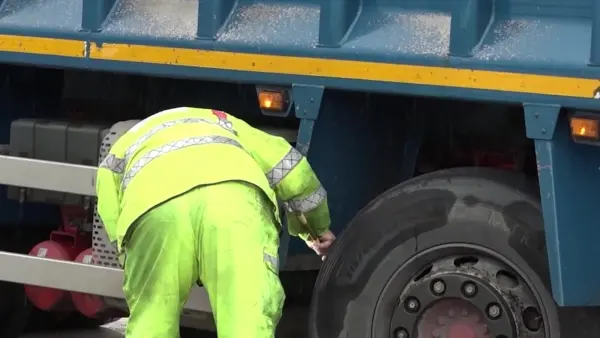
Tyre safety charity TyreSafe has released a new educational video filmed alongside Driver and Vehicle Standards Agency (DVSA) examiners, highlighting preventable tyre defects. Official enforcement data has revealed tyres were the leading cause of roadside prohibitions for both lorries and trailers between April and June 2026.
Captured at an active DVSA roadside inspection site, the film demonstrates the critical safety faults examiners routinely uncover and urges heavy goods vehicle (HGV) operators to ensure daily walkaround checks are properly executed, logged, and rectified before vehicles return to service.
2026 statistics reveal current extent of tyre defects in CV prohibitions

DVSA Earned Recognition operator Ainscough Cranes gave some operational insight to the TyreSafe video (Photo: TyreSafe)
According to DVSA mechanical inspection figures for Q2 2026, examiners conducted 6,786 targeted inspections at roadsides and operator premises, issuing prohibitions to 21.4 per cent of vehicles, rising to 27 per cent among GB-registered lorries. Tyre defects accounted for 7.62 prohibitions per 100 lorries inspected, triple the rate of the second most common fault, exhaust emissions (2.48). on trailers, the rate doubled to 15.48 tyre defects per 100 inspections, more than two-and-a-half times the rate of brake defects (6.23). Tyres also remain the second most common cause of first-time annual test failures behind brakes.
While HGV fatal and serious collision rates per mile have fallen faster than any other vehicle category since 2009, lorries still accounted for 7 per cent of vehicles involved in fatal collisions in 2025, with other road users making up over 90 per cent of fatalities.
‘No excuse for poor maintenance’ – TyreSafe stakeholders
Stuart Lovatt, chair of TyreSafe, said: “Our film shows what DVSA examiners see every day: tyre defects a driver could spot in a few minutes on a walkaround check. When tyres are the most common reason for a lorry or trailer to be prohibited, it’s clear that too many checks are being done but not followed through.
“Every defect a driver finds must be reported, fixed and signed off before the vehicle goes back out. Operators need to give drivers the time and training to check properly, and the systems to make sure reported defects are dealt with. Delivery pressures must never come before safety.”

(Photo: TyreSafe)
Andrew Donald, DVSA enforcement policy manager, said: “DVSA continues to find tyre defects that could have been identified through an effective walkaround check.
“There is no excuse for poor maintenance – these defects put all road users at risk.
“Drivers and operators have a responsibility to keep vehicles safe and roadworthy. A thorough check of tyres, wheels, lights and other safety-critical components before a vehicle is used can prevent defects becoming a serious risk on the road.”
The campaign also features operational insight from DVSA Earned Recognition operator Ainscough Cranes. Lee Sixsmith, operations director UK, Ainscough Cranes, said: “As a DVSA Earned Recognition operator, we treat the daily walkaround check as the most important few minutes of the working day. Our drivers are trained to check every tyre and wheel properly, and they are given the time to do it.
“Just as important is what happens next. Every defect a driver reports is logged, fixed and signed off before that vehicle goes back out. That is what keeps our fleet safe, legal and working, and we were glad to help TyreSafe show what good practice looks like.”
TyreSafe advice

(Photo: TyreSafe)
To help fleets protect their Operator Compliance Risk Score (OCRS) and avoid costly roadside delays, TyreSafe is reminding drivers to apply its ACT inspection protocol alongside wheel nut security checks:
- Air pressure: Verify against manufacturer load recommendations, including inner twin tyres.
- Condition: Inspect for cuts, bulges, exposed cords, embedded objects, irregular wear, and ensure tyres on front steered axles of vehicles over 3,500kg are under 10 years old with legible date codes.
- Tread: Ensure at least 1mm of tread depth across the central three-quarters of the tyre around its entire circumference.
Any safety-critical defect should be reported in writing, and the vehicle kept off the road until it is fixed. Roadside prohibitions also count against an operator’s Operator Compliance Risk Score (OCRS), which makes future stops more likely.
TyreSafe is encouraging transport managers to distribute the film to drivers and maintenance teams and align internal procedures with the DVSA’s ‘Guide to maintaining roadworthiness’.