
Electric Vans — Are They The Final EV Frontier? Kia PV5.
Support CleanTechnica’s work through a Substack subscription, on Patreon, or on Stripe. Help us produce all of the high-quality, original content we publish week after week despite the challenges of content-scraping AI, antisocial media, inflation, and other hurdles.
We took a trip to see the Kia PV5 electric van. Our brief takeaway: “Kool like a Kia.” Should keep the bean counters happy.

Inspired by a comment in the Electric Vehicle Council report about electric vans, Majella and I decided to have a short visit to a group of dealerships under the Norris Motors banner. We hoped to check out the LDV eDeliver 5 van, touted as selling for under AU$50,000. However, there was no stock to view and we ended up chatting to the dealer and then moving on to the MG U9 BEV ute. You can read about it here. And then we found the Kia PV5 delivery van.
Julie Delvecchio, the CEO of EVC, calls the lack of affordable electric vans in Australia “the single biggest unclaimed opportunity left.” We think that is about to change. Since its launch in May, 496 PV5 have sold in Australia.
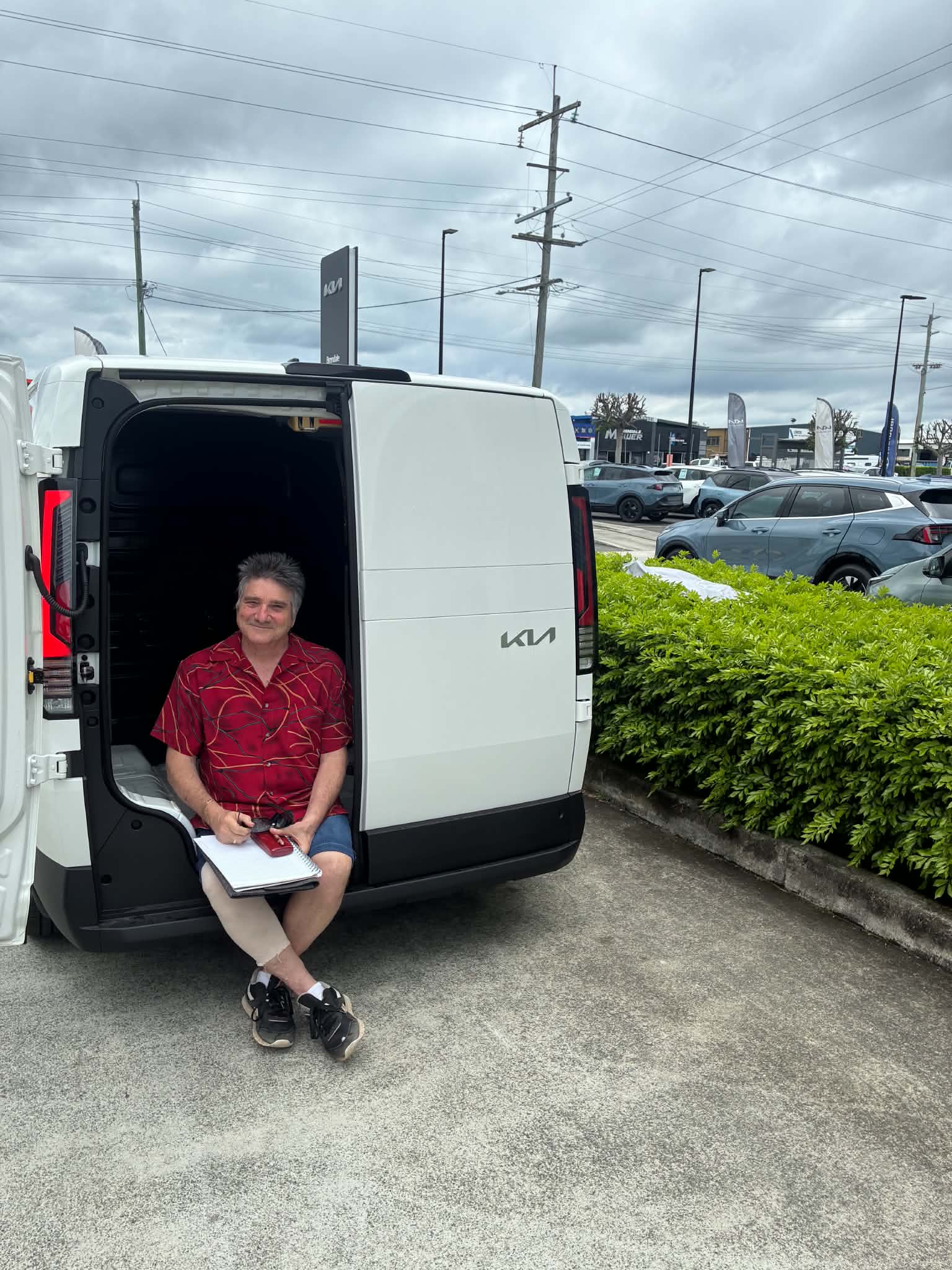
The Kia PV5 reminded me a lot of the Renault Kangoo in both size and shape, and it is able to carry about the same payload. And the front looked like the BMW i3. The one we looked at had been sold and was awaiting a fitout as a camper van. The Norris Group Kia specialist was generous with his time and the information he shared. He has been selling the Kia EV5 for the past 5 months and delivered 5 of the vans. He sold his first one within a week of its arrival on the lot — to Ray, a driver working for Amazon.
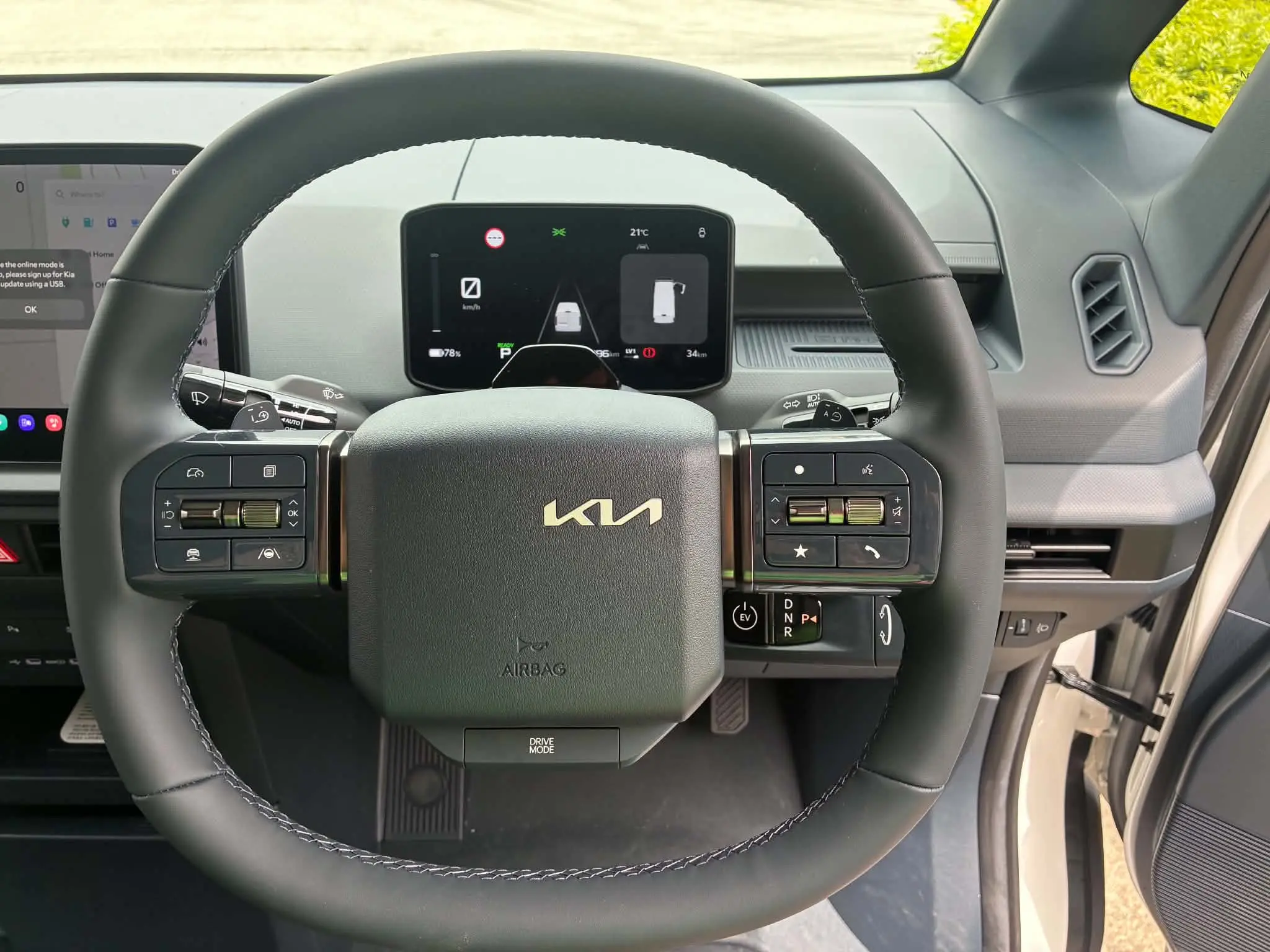
Ray appreciated the 390 km range. My friendly sales rep tells me that this will be increased in 2027 models to 420 km. Ray was getting out of diesel and most of his questions were around charging and regen braking. Most of his trips were around the burbs and he was not intending to take the van on the highway. The Kia PV5 is a workhorse, with a passenger car feel and level of comfort. It even has electric lumbar support for the driver — great when you are spending so much time in the van delivering parcels in the lead-up to Christmas. It certainly has a lot more tech than the diesel he was trading in.
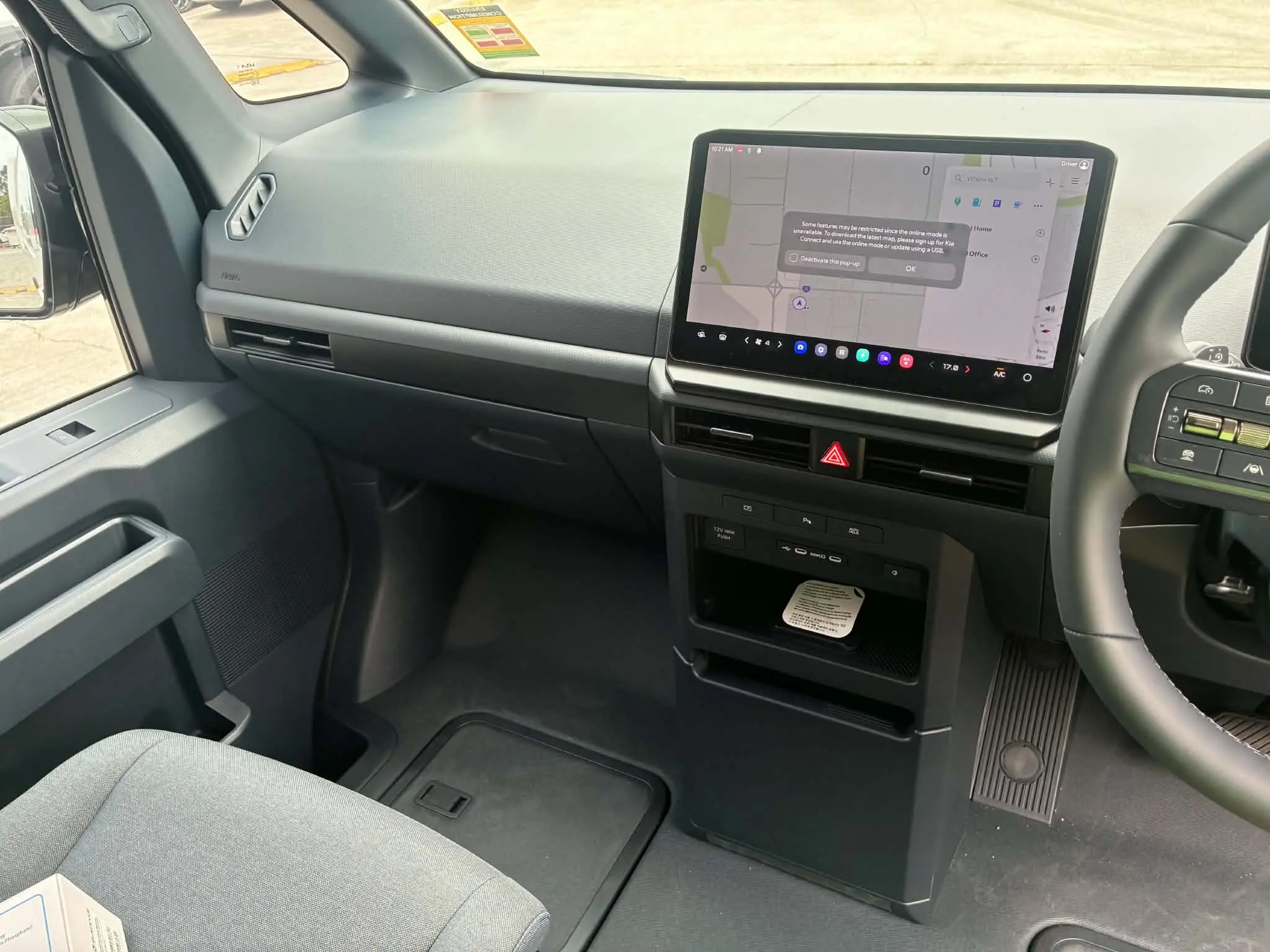
In fact, he was “blown away” by the standard features — the 360-degree camera, for example. “Vans are not known for their visibility.” On his return to the dealership for his first service, he commented on the smoothness of the torque: “It has no issues going uphill.” He reported that the van felt “well planted on the road.” Ray has gotten used to trickle charging at home and has lost his range anxiety. Like most new EV drivers, once he started living and working with the vehicle, his fears vanished. The PV5 supports fast charging also for when Ray needs a boost on the road.
But what about that all-important question of cost? Can we make the bean counters happy? The Kia PV5 retails for AU$56,000 (before on-road costs), which is about the same price as comparable diesel vans like the Ford Transit and the Toyota HiAce. Add to that the savings on fuel, the peace of mind from fuel security, and the reduced servicing and it is easy to build a business case for the Kia PV5 — cost per parcel delivery. The PV5 even comes with vehicle to load.
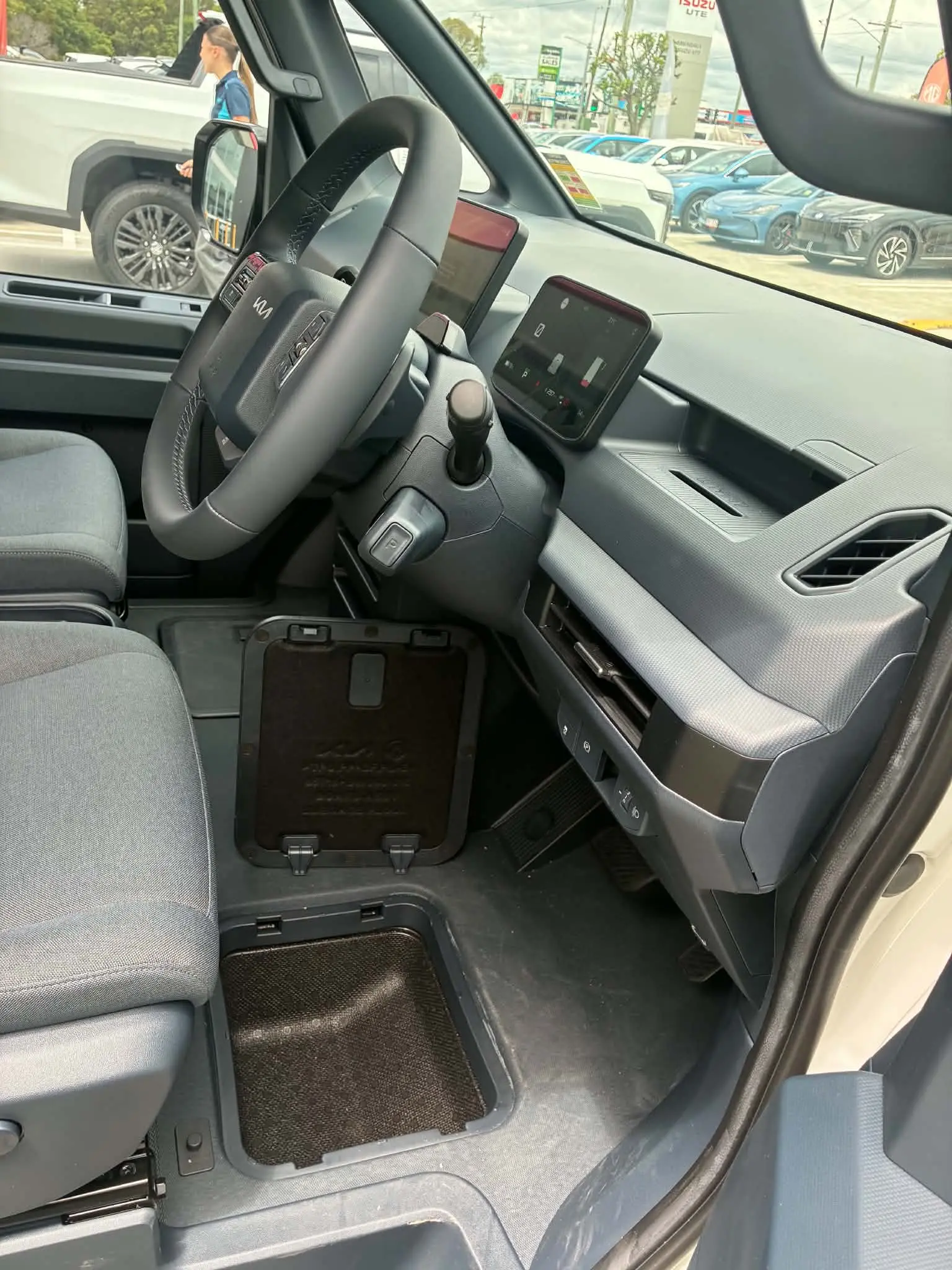
And it isn’t made in China! Can the PV5 replace Toyota’s HiAce? Find the answer in this video. The reviewer points out many features that make the PV5 an attractive option: the charge port is on the front. The van has lots of nooks and crannies for storage. She measures storage by capacity to fit in bottles of wine — for example, two in the glove box. There is a step provided to alight the van, aided by grab handles. More storage space is provided above the steering wheel, including a nifty phone slot. There are customizable buttons on the steering wheel to create shortcuts; for example, to the air conditioning settings. A wireless phone charger is nestled near the dash. The glovebox contains the V2L adaptor supplied with the van.
The fact that the van reverts to the lowest regen setting every time you restart the car is a little niggle. That, and there is no frunk — reducing the reviewer’s all-important need for wine storage. Full specs can be found here. Kia even gives you helpful advice on how to apply for electric vehicle subsidies (last page, bottom right). One of the pictures that caught my eye shows the PV5 as a flatbed truck.
The PV5 was recently named 2026 International Van of the Year. It measures 4695mm long, 2255mm wide, and 1899mm tall on a 2995mm wheelbase. Range is stated as 416 km, but will of course vary with driving style and load. The battery is a 71.2kWh nickel cobalt manganese (NCM) lithium-ion battery. Kia offers a 165,000 km warranty on the battery. The van is front-wheel drive.
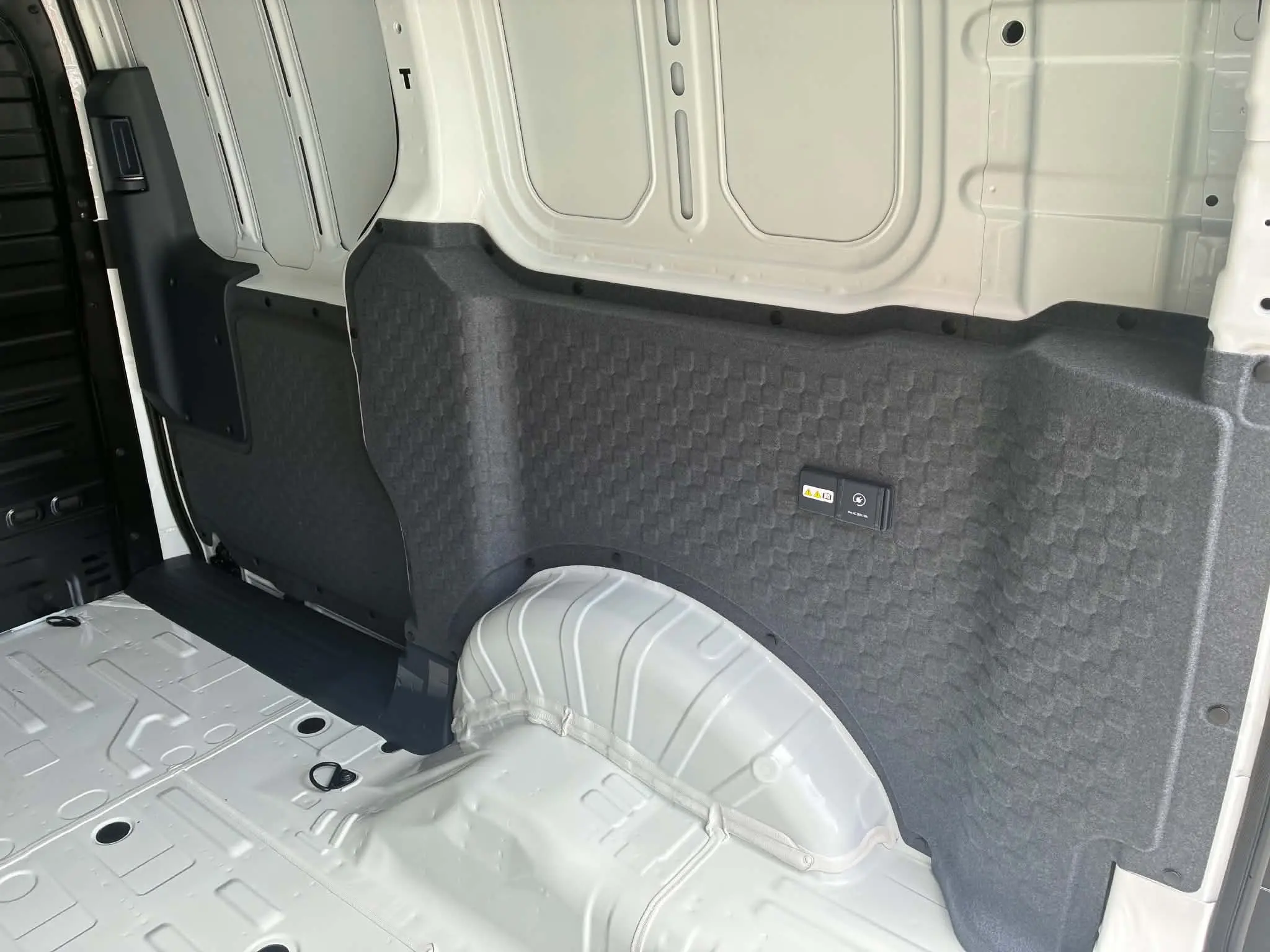
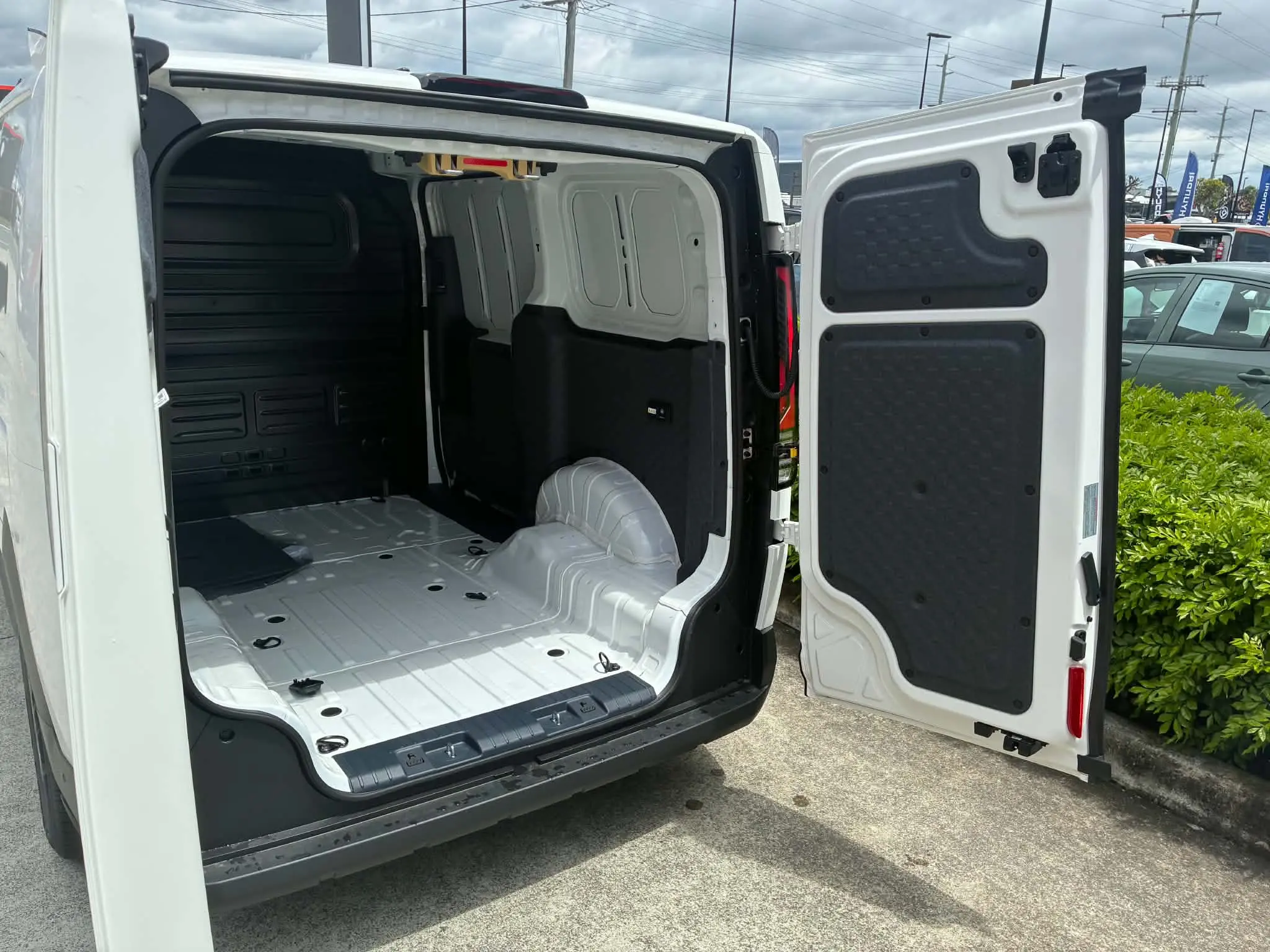
The PV5 has over 4 cubic metres of cargo capacity, double both that of the ID Buzz and the Tesla Model Y. Space enough for two euro pallets. There are multiple access points, with sliding doors on both sides and barn doors in the rear. The rear barn doors open to 180 degrees, and a low 419mm load height improves accessibility.
Goods being shipped are protected by padding on the rear doors and insides of the back. The PV5 can carry up to 740 kg. Tiedowns on the floor of the rear of the van help to secure cargo. There is also a power point in the back of the van. Perhaps a tradie can recharge their tools on site. No frunk for wine.
From the spec sheet: “Standard driver assist features include blind-spot collision avoidance, navigation-based adaptive cruise control, lane-keep assist, lane centring with hands-on detection, and parking collision avoidance assist.”
A launch in the USA is financially difficult because of the 25% “chicken tax.” Kia builds the PV5 in South Korea and classifies it as a commercial vehicle, and it faces a 25% US import tariff on light trucks and commercial vans.
Sadly, the Kia PV5 doesn’t come in red, but only in white, grey and black. Most companies may take up the option of wrapping the van in their own livery. Overall, we were impressed with Kia PV5 and look forward to seeing more of them on the road throughout the suburbs as Australian delivery drivers move towards a bright electric future.
Sign up for CleanTechnica’s Weekly Substack for Zach and Scott’s in-depth analyses and high level summaries, sign up for our daily newsletter, and follow us on Google News!
Have a tip for CleanTechnica? Want to advertise? Want to suggest a guest for our CleanTech Talk podcast? Contact us here.
Sign up for our daily newsletter for 10–15 new cleantech stories a day. Or sign up for our weekly one on top stories of the week if daily is too frequent.

CleanTechnica uses affiliate links. See our policy here.
CleanTechnica’s Comment Policy